A steel coating system is only as good as the surface, environment, application, and inspection records behind it. Owners often focus on coating brand, number of coats, and warranty language, but the decisive question is whether the work was verified at the right hold points. Steel coating QA/QC is the process that proves corrosion protection was installed on clean, profiled, dry, and inspectable steel at the specified thickness and condition.
For bridges, industrial platforms, buildings, tanks, and exposed structural frames, coating inspection is the owner’s last chance to buy verified protection before access is removed and corrosion is hidden under a new finish. A professional QA/QC plan does not slow the project down when it is integrated into the sequence. It prevents rework, premature rusting, holiday repair disputes, and arguments over whether failure was caused by design, preparation, application, or service exposure.
Define the Coating System Before the Work Starts
QA/QC begins before blasting. The specification should define the substrate, exposure environment, target service life, surface preparation standard, soluble salt limits where relevant, surface profile, coating materials, stripe coat requirements, minimum and maximum dry film thickness, recoat windows, cure requirements, repair procedure, inspection frequency, and acceptance criteria. If these items are vague, the field inspector is forced to interpret quality after the fact.
AMPP standards and industry training provide the common language for protective coatings work. ASTM methods support specific measurements such as dry film thickness and pull-off adhesion. FHWA steel bridge guidance is useful for owners dealing with bridge-specific access, containment, weather, fatigue details, and maintenance constraints. The project does not need every test on every square meter. It needs the right tests at the right decision points.
Hold Point 1: Existing Steel Condition
Before surface preparation, record the existing steel condition. Note corrosion grade, pitting, pack rust, crevice corrosion, section loss, cracked welds, loose fasteners, lamination, oil contamination, previous coating type, and areas where water is trapped. Coating work should not hide structural defects. If steel section loss threatens capacity, the repair scope may need plate replacement, bolted or welded reinforcement, bearing repair, drainage correction, or fatigue evaluation before coating acceptance.
This is where internal links between disciplines matter. A coating project on a bridge girder end may also require the assessment approach described in our steel girder end repair guide. A coating project on a cracked frame may need the structural review discussed in steel structure repair for cracks, corrosion, weld defects, and fatigue.
Hold Point 2: Surface Preparation and Profile
Most coating failures begin at the surface. The inspector should verify the specified cleanliness level, removal of loose rust and unsound coating, edge grinding, weld spatter removal, dust control, and surface profile. The required profile depends on the coating system. Too little profile may reduce mechanical bond. Too much profile can create peaks that are difficult to cover and can become corrosion initiation points if the primer does not fully wet the surface.
Surface preparation is also the point where access and sequencing defects become visible. Back-to-back angles, bolted laps, bearing zones, stiffener toes, and drainage details are harder to prepare and coat than open plate. If the specification treats all surfaces as equally reachable, the inspector should flag difficult details early and document how they will be handled. Stripe coating is often critical at edges, welds, bolts, and corners because spray application naturally leaves thinner film at sharp geometry.
Hold Point 3: Environmental Conditions
Coatings are sensitive to temperature, humidity, dew point, wind, dust, and surface moisture. The QA/QC record should show that steel temperature, air temperature, relative humidity, and dew point separation were acceptable during preparation, application, and cure. These readings are not paperwork rituals. They explain whether condensation, slow cure, solvent entrapment, poor wetting, or contamination may have affected the film.
Environmental controls are especially important for night work, coastal sites, high humidity, shaded bridge members, confined spaces, and steel exposed to rapid temperature changes. If the contractor cannot maintain the required conditions, the quality decision is not to keep painting and hope. It is to stop, protect the prepared steel, adjust the work window, or change the containment and ventilation plan.
Hold Point 4: Dry Film Thickness
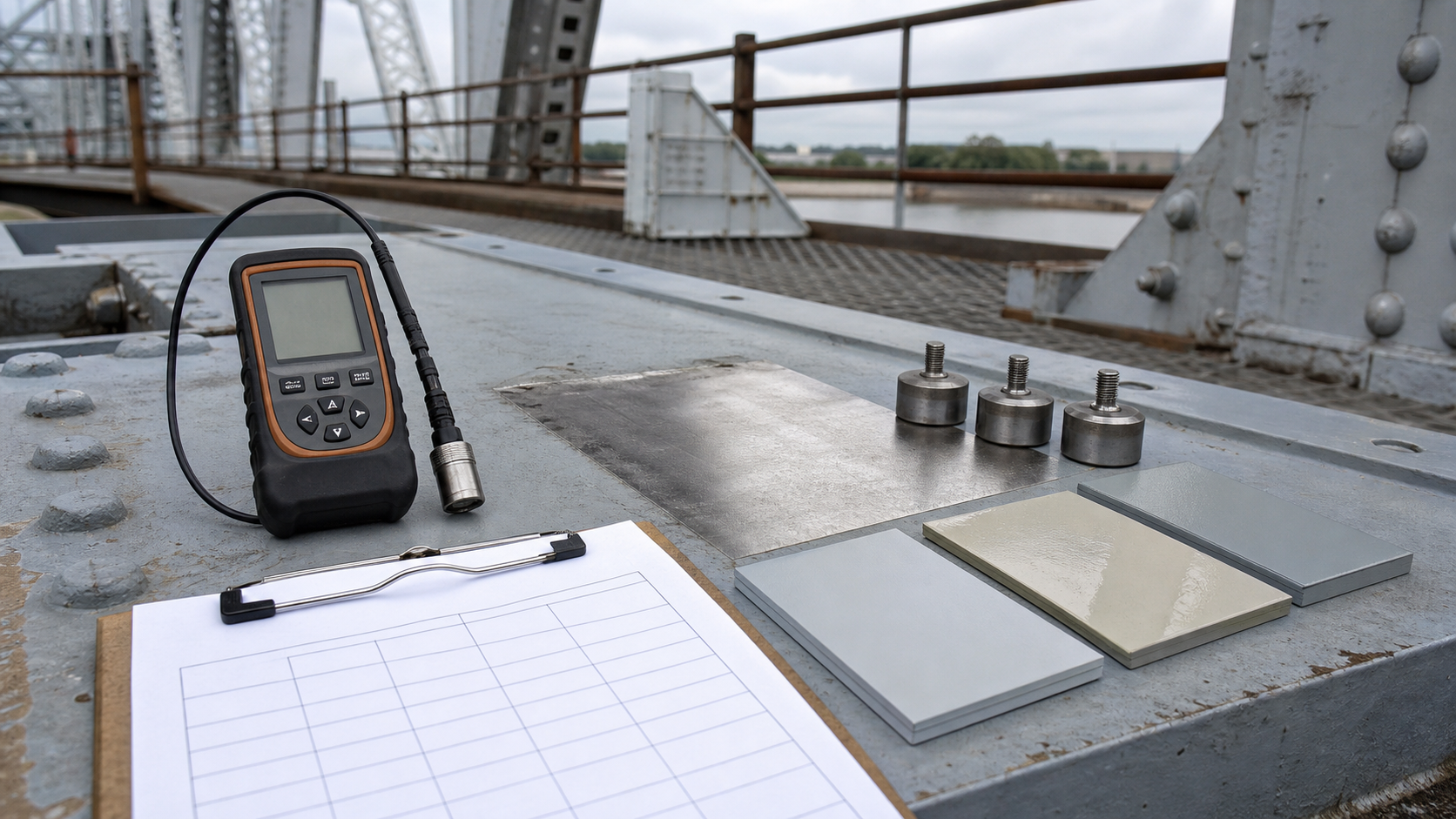
Dry film thickness, or DFT, confirms whether the protective film is thick enough to perform but not so thick that cure, cracking, solvent retention, or compatibility become concerns. ASTM D7091 addresses nondestructive measurement of dry film thickness on ferrous and non-ferrous metals using magnetic and eddy-current gauges. For steel structures, DFT inspection should follow the specified measurement frequency and acceptance rules, not isolated spot checks chosen after the surface looks finished.
Structural Rehab has a focused guide on dry film thickness testing for steel coatings. The short version is that inspectors should calibrate or verify gauges, measure representative surfaces, document low areas, and confirm repairs after touch-up. Thin film at edges, bolt heads, weld toes, and difficult access zones is common. Those are often the same places where corrosion starts first.
Hold Point 5: Adhesion and Cure
Adhesion testing is not always required on every coating project, but it is valuable when the coating system is high risk, the substrate is questionable, the owner needs proof of bond, or a failure investigation is underway. ASTM D4541 covers pull-off strength of coatings using portable adhesion testers. The test is destructive at the dolly location, so the specification should define where tests are allowed, how many are required, what failure modes mean, and how test spots are repaired.
Cure should also be verified before service exposure or overcoating. A film that is dry to touch may not be ready for immersion, traffic, handling, or the next coat. The inspector should check manufacturer recoat windows, temperature-adjusted cure time, solvent sensitivity, hardness where specified, and any special requirements for zinc-rich primers, epoxies, polyurethanes, polysiloxanes, or metallizing systems.
Repair Records and Final Acceptance
A coating QA/QC record should show what was accepted, what was rejected, and how defects were repaired. Common defects include pinholes, holidays, runs, sags, dry spray, mud cracking, overspray, contamination, missed stripe coats, mechanical damage, under-thickness, over-thickness, and poor adhesion. The repair method should be compatible with the original system and should include surface preparation at the repair edge, not just brushed paint over a defect.
Final acceptance should include photographs, batch numbers, environmental logs, surface preparation records, profile readings, DFT readings, adhesion results if used, nonconformance reports, repaired defect logs, and maintenance recommendations. That package becomes the baseline for future inspections. Without it, the next owner or engineer has to guess what was installed and why corrosion appeared where it did.
Limitations and Owner Decisions
QA/QC cannot make a poorly selected coating system appropriate for the exposure. It cannot compensate for trapped water, unsealed crevices, severe section loss, incompatible old coatings, or details that cannot be accessed. It also cannot guarantee service life when maintenance, drainage, impact damage, and chemical exposure are uncontrolled. What it can do is separate installation quality from design assumptions and service conditions. That distinction is essential when planning future structural protection.
FAQ
Is DFT testing enough to accept steel coating work?
No. DFT is important, but it does not prove surface cleanliness, profile, environmental control, cure, adhesion, edge coverage, or repair quality. It should be one part of the QA/QC plan.
When should owners require pull-off adhesion testing?
Require it when bond is a critical risk, when the substrate or existing coating history is uncertain, for trial areas, or when investigating defects. Define acceptance criteria and repair of test locations before work begins.
Who should perform coating inspection?
Use competent inspectors familiar with the coating system, standards, access conditions, and structural risk. For major assets, third-party coating inspection can protect both owner and contractor by documenting acceptance decisions clearly.
Sources
- AMPP standards for corrosion and protective coatings
- ASTM D7091, nondestructive dry film thickness measurement
- ASTM D4541, pull-off strength of coatings
- FHWA, steel bridge design handbook and steel bridge guidance
Planning steel structure protection or repair? Review Structural Rehab services or book a consultation for a practical QA/QC scope before coating work starts.
Need a professional structural assessment?
Book a consultation with Structural Rehab to evaluate repair priorities, corrosion risks, and rehabilitation options before damage escalates.
Book Consultation