Concrete Structure Repair Warning Signs
7 Critical Signs Your Concrete Structure Needs Immediate Repair
Concrete rarely fails without warning. Long before a slab, beam, column, tank, bridge deck, parking structure, or industrial floor reaches a critical condition, it usually starts communicating through cracks, stains, movement, moisture, surface loss, or vibration. The challenge for owners is knowing which signs are cosmetic and which signs require professional concrete structure repair before safety, serviceability, and asset value are affected.
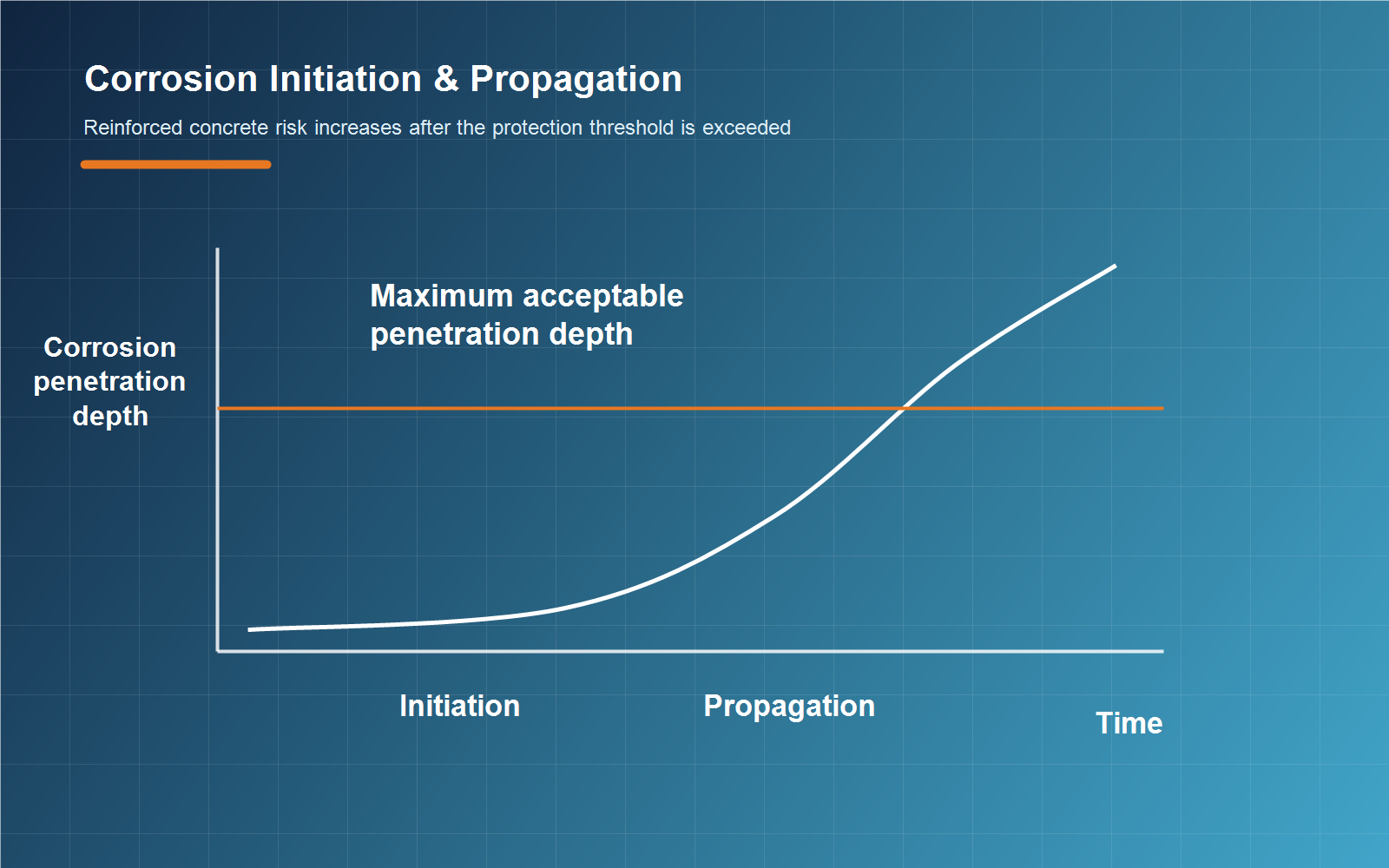
Early detection matters because deterioration is progressive. A hairline crack can become a water path. Water can carry chlorides and carbon dioxide into the concrete. Embedded steel can corrode. Corrosion products expand and split the surrounding concrete. Once spalling begins, the repair scope grows from simple sealing or epoxy injection to patch repair, reinforcement cleaning, corrosion treatment, concrete jacketing, carbon fiber reinforcement, or partial replacement. Proactive assessment is almost always less disruptive and less expensive than emergency repair.
1. Visible cracking
Cracks are the most familiar sign of distress, but not every crack has the same meaning. Shrinkage cracks, thermal cracks, settlement cracks, flexural cracks, shear cracks, and corrosion-driven cracks all have different causes and different repair requirements. Fine map cracking near the surface may point to shrinkage, finishing issues, or chemical exposure. Wider cracks that continue through a member, change direction near supports, or grow over time deserve immediate attention.
The risk of ignoring visible cracking is that cracks provide a direct path for water, carbon dioxide, chlorides, sulfates, and other aggressive agents. In structural members, cracks can also signal overload, inadequate reinforcement, excessive deflection, restraint, or foundation movement. Recommended repair can range from routing and sealing to low-viscosity epoxy injection, polyurethane injection for active leakage, stitching, carbon fiber reinforcement, or structural redesign. A professional assessment should classify the crack as structural or non-structural before repair is selected.
2. Spalling and delamination
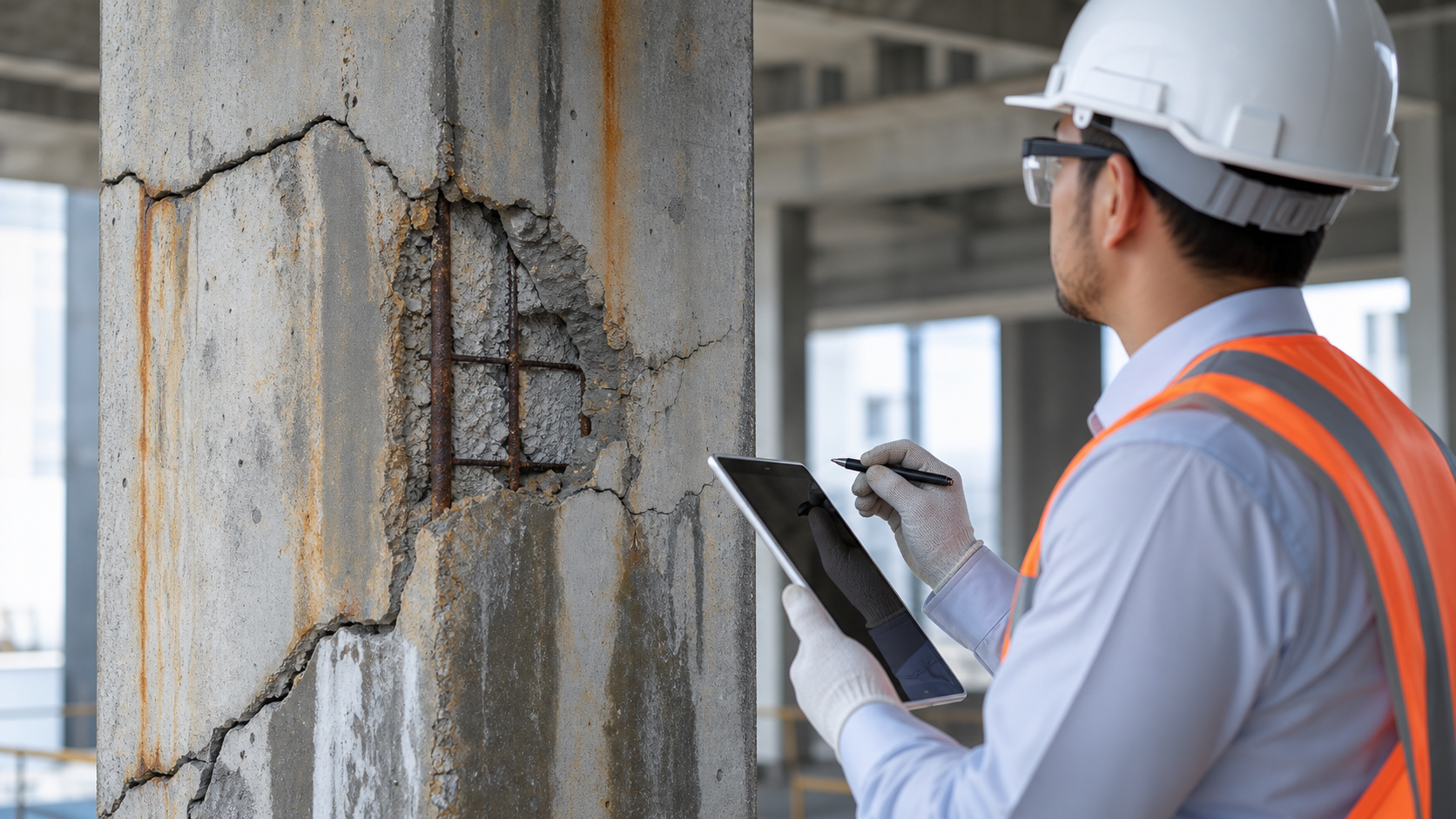
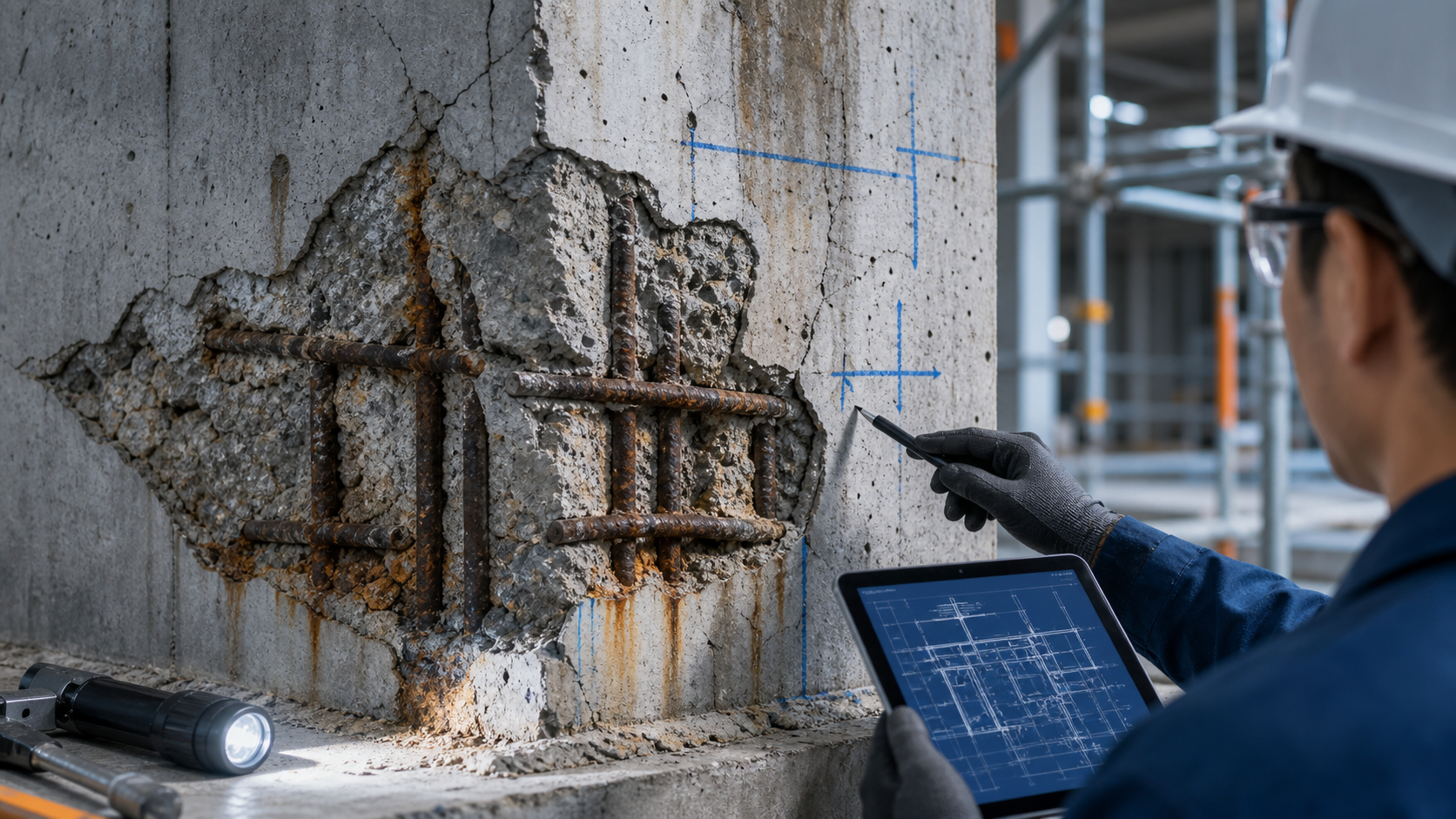
Spalling is the loss of concrete from the surface. Delamination is a hidden separation within the concrete that may sound hollow when tapped. Both are common when embedded reinforcement corrodes, when freeze-thaw cycles attack saturated concrete, when poor consolidation leaves voids, or when impact and abrasion damage the surface. The visible broken area is often smaller than the affected zone below it.
If spalling is ignored, reinforcement can lose cover and become more exposed to corrosion. The member may continue shedding material, creating safety hazards for pedestrians, vehicles, equipment, and building users. Repair usually includes removing unsound concrete, cleaning or replacing corroded steel, applying corrosion protection, restoring section with compatible repair mortar, and adding protective coating or waterproofing. Severe cases may require concrete jackets, added steel reinforcement, or structural rehabilitation services.
3. Efflorescence
Efflorescence is the white powdery residue left behind when water moves through concrete or masonry and carries dissolved salts to the surface. It can look harmless, but it is strong evidence of moisture migration. In basements, retaining walls, tanks, podium slabs, parking structures, and facade elements, efflorescence often points to failed waterproofing, poor drainage, leaking joints, or cracks that need attention.
The risk is not the white residue itself. The risk is the water pathway behind it. Persistent moisture can accelerate reinforcement corrosion, support mold growth, damage finishes, reduce durability, and cause repeated coating failures. Repair may include crack injection, joint sealing, surface preparation, drainage improvement, waterproofing membranes, crystalline treatments, or anti-carbonation coatings. The important step is finding and stopping the source of water rather than repeatedly washing the surface.
4. Rust stains
Rust stains on concrete usually mean steel reinforcement, embedded plates, anchors, or connection hardware are corroding. Corrosion is expansive: as steel rusts, it occupies more volume than the original metal. That expansion creates pressure inside the concrete, leading to cracking, delamination, and spalling. Rust stains near cracks, joints, slab edges, balconies, marine structures, or parking decks are especially important.
Ignoring rust stains can allow the steel section to reduce, weakening load capacity and making later repairs more invasive. Recommended repair begins with diagnosing chloride exposure, carbonation depth, cover thickness, moisture level, and corrosion activity. Depending on severity, the solution may include patch repair, corrosion inhibitors, cathodic protection, replacement of severely corroded steel, protective coatings, or waterproofing. For assets near coastal or industrial environments, corrosion protection should be designed as part of the repair, not added as an afterthought.
5. Settlement or uneven surfaces
Uneven slabs, sloping floors, widening joints, cracked tiles, jammed doors, and displaced pavement can indicate settlement. Settlement can come from poor compaction, soil erosion, leaking utilities, changes in groundwater, foundation overload, expansive soils, or voids under slabs. Some settlement is local and serviceability-related. Other settlement affects columns, beams, walls, and foundations and can become a structural safety issue.
The risk of ignoring settlement is progressive distortion. Loads may redistribute in ways the structure was not designed to carry. Water may pond, increasing leakage and deterioration. Repairs may include soil investigation, void filling, slab lifting, underpinning, drainage correction, foundation repair, joint reconstruction, or structural strengthening. Because settlement problems involve both structure and ground conditions, they should be assessed before surface repairs are applied.
6. Water leakage or damp patches
Water leakage through concrete is never just a nuisance. Damp patches, dripping cracks, wet construction joints, leaking retaining walls, and moisture beneath coatings all show that water has found a path. In concrete structure repair, water control is essential because many repair materials and coatings cannot perform if the substrate remains wet or if pressure continues behind the repair.
If leakage continues, the structure may experience reinforcement corrosion, freeze-thaw damage, efflorescence, coating failure, interior damage, and occupant complaints. Repair techniques include polyurethane injection for active leaks, epoxy injection where structural bonding is needed, joint waterstops, exterior waterproofing membranes, drainage layers, surface-applied crystalline systems, and improved grading. The correct technique depends on whether the crack is active, whether movement is expected, and whether water pressure is present.
7. Unusual noises or vibrations
New noises, vibration, bouncing floors, rattling steel, or movement under normal service loads should be treated seriously. They may indicate loosened connections, fatigue, loss of stiffness, dynamic loading problems, impact damage, weakened supports, or changes in load path. In industrial facilities and parking structures, vibration can also accelerate cracking and connection fatigue.
Ignoring unusual movement can allow a serviceability issue to become a safety concern. The recommended response is to document when the vibration occurs, what loads are present, and whether the symptom is changing. Engineers may use visual inspection, monitoring, vibration measurement, structural analysis, connection review, or load testing. Repair can include connection strengthening, added bracing, carbon fiber reinforcement, steel plate bonding, jacketing, or operational changes that reduce dynamic loads.
How to choose the right repair technique
A durable repair matches the technique to the root cause. Epoxy injection can bond dormant structural cracks, but it is not the right answer for active water leakage. Patch repair can restore cover, but it will fail if corrosion continues behind it. Carbon fiber reinforcement can add tensile capacity with minimal weight, but it must be designed for the load path and bonded to sound concrete. Concrete jacketing can add stiffness and strength, but it changes member dimensions and may affect architecture, clearances, and connections.
The best first step is a structured assessment. That assessment should define the defect, the cause, the risk, the repair objective, surface preparation requirements, material compatibility, quality control tests, and protection strategy. Owners should ask for clear documentation, not just a quick patch. A repair plan should explain what will happen if no action is taken, what level of disruption is expected, and how the completed work will be verified.
Conclusion
Concrete structure repair is most successful when warning signs are addressed early. Visible cracking, spalling, efflorescence, rust stains, settlement, leakage, and vibration are not isolated symptoms; they are clues about how the structure is performing and how deterioration may progress. A proactive assessment can extend service life, reduce risk, and help owners invest in the right repair at the right time.
Explore our concrete repair and structural rehabilitation services, or book a consultation if your asset is already showing one of these warning signs.
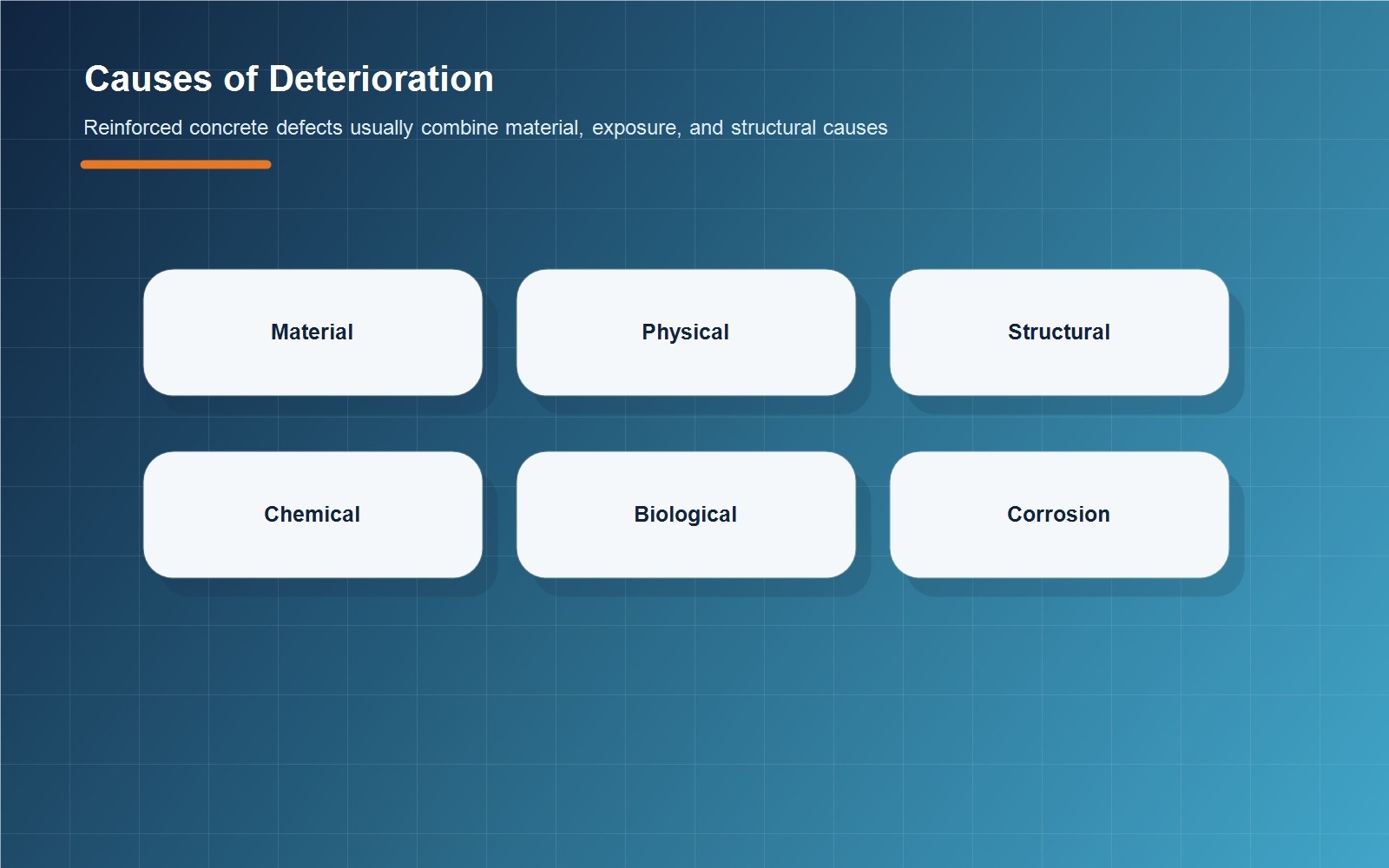
Concrete Deterioration and Corrosion Progression
These redesigned diagrams make the causes of deterioration and the timing of corrosion-related intervention easier to understand.
Video resources
Concrete Deterioration Video Guide
This English video expands on the warning signs discussed in the article and helps connect visible deterioration to repair timing.
Technical video
Concrete Deterioration: Causes, Warning Signs, and Repair Timing
Understand concrete deterioration, visible warning signs, corrosion-related damage, moisture pathways, and when repair intervention is needed.
Tags: concrete deterioration, concrete repair, spalling, corrosion, cracking, repair timing, structural rehabilitation
Need a professional structural assessment?
Book a consultation with Structural Rehab to evaluate repair priorities, corrosion risks, and rehabilitation options before damage escalates.
Book Consultation