Steel Structure Protection and Corrosion Prevention
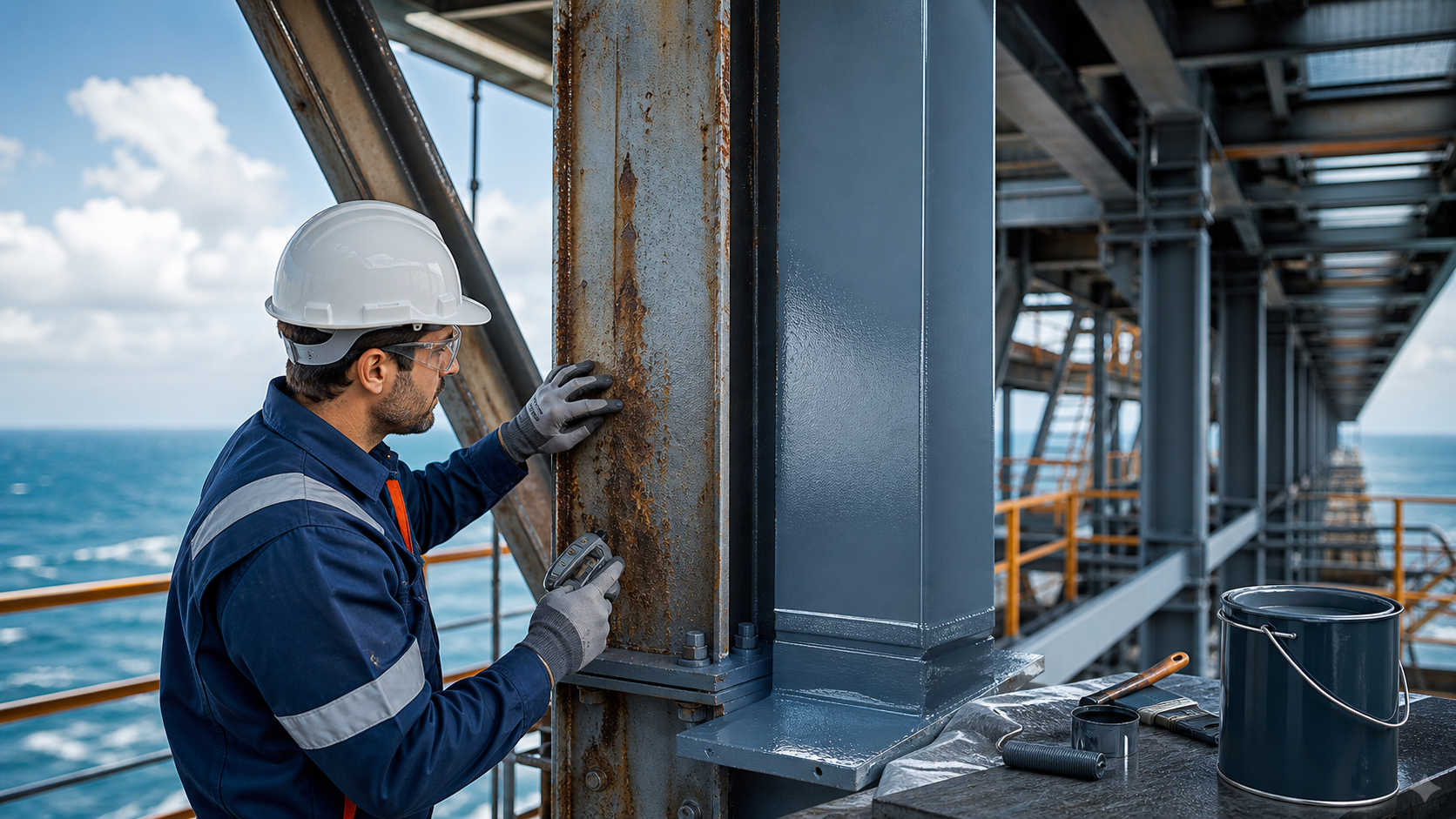
Steel is one of the most reliable structural materials because it is strong, predictable, ductile, and efficient. Yet steel has one persistent vulnerability: corrosion. Without proper steel structure protection, moisture, oxygen, salts, chemicals, and industrial pollutants can reduce effective section thickness, weaken connections, damage coatings, and create safety hazards long before the design life is reached.
Corrosion prevention is not simply a paint decision. It is a system of design detailing, surface preparation, coating selection, inspection, maintenance, and repair timing. Owners of warehouses, bridges, industrial plants, coastal facilities, towers, canopies, platforms, and parking structures should treat corrosion protection as an asset management program rather than a one-time maintenance task.
The science of steel corrosion
Steel corrosion is an electrochemical process. In the presence of water and oxygen, areas on the steel surface become anodic and cathodic. At the anodic areas, iron gives up electrons and forms corrosion products. Salts, acids, pollutants, and high humidity increase conductivity and speed up the process. The more often the steel surface remains wet, the more opportunities corrosion has to advance.
Environment matters. Coastal environments expose steel to chlorides carried by sea spray. Industrial environments may include sulfur compounds, chemical vapors, abrasive dust, or process water. High-humidity buildings can keep steel damp even when rain is not present. Buried or immersed steel can corrode differently because oxygen levels vary along the surface. Each exposure category requires a protection strategy matched to the risk.
Consequences of ignoring corrosion
The most obvious consequence is loss of section. As steel corrodes, effective thickness reduces. A beam flange, web, brace, column base plate, bolt, anchor, or connection plate can lose capacity. Pitting can create local stress concentrations. Crevice corrosion can hide behind overlaps, bolts, plates, and poorly sealed details. When corrosion reaches connections, the problem becomes more urgent because load transfer can be compromised.
Ignored corrosion also increases lifecycle cost. Coating failure expands, rust staining damages surrounding finishes, water paths become established, and access requirements grow. A small maintenance project can become a shutdown, scaffold-heavy repair campaign. Safety risks include falling scale, weakened platforms, slipping hazards from rust debris, and structural failure in severe cases.
Advanced coating systems
Protective coatings for structures are selected based on exposure, required durability, surface preparation, appearance, maintenance access, and budget. Zinc-rich primers provide galvanic protection by sacrificing zinc before steel. Epoxy intermediate coats offer strong barrier performance and chemical resistance. Polyurethane or polysiloxane topcoats improve UV resistance, color stability, and cleanability. In immersion or chemical environments, specialized epoxy systems may be required.
Surface preparation is as important as coating chemistry. A premium coating applied over contaminated, damp, or poorly prepared steel will fail early. Specifications should define cleaning standards, blast profile, salt contamination limits, edge preparation, stripe coating at corners and welds, dry film thickness, curing conditions, holiday testing where relevant, and inspection hold points.
Cathodic protection
Cathodic protection reduces corrosion by making the protected steel act as the cathode of an electrochemical cell. Sacrificial anode systems use a more active metal that corrodes preferentially. Impressed current systems use a power source to control protective current. These systems are common for buried pipelines, marine structures, tanks, waterfront assets, and some reinforced concrete applications where corrosion risk is high.
Cathodic protection requires design, monitoring, and maintenance. It is not a substitute for good detailing, coatings, or inspection, but it can be a powerful layer of defense when exposure is severe or when access for repeated coating maintenance is limited.
Corrosion-resistant alloys and cladding
In some projects, the best protection is material selection. Stainless steel, weathering steel, duplex alloys, galvanized steel, metalizing, cladding, or lined systems may be justified when exposure is aggressive or maintenance access is difficult. These options can carry higher initial cost, but they may reduce lifecycle cost when downtime and repeated coating repairs are expensive.
Material decisions should be made with the environment in mind. Weathering steel, for example, needs wet-dry cycles and suitable detailing to form a stable protective patina. In continuously wet or chloride-rich conditions, it may not perform as expected. Galvanizing provides durable protection in many atmospheric environments but may need compatible topcoats in harsher exposure.
Inspection and maintenance protocols
Inspection turns steel structure protection from guesswork into management. A practical protocol should document coating condition, rust grade, blistering, cracking, chalking, mechanical damage, connection condition, drainage details, and areas where water or debris accumulates. ISO 12944 is often used as a reference framework for atmospheric corrosion environments and coating durability planning.
Maintenance should prioritize early touch-up. Small holidays, scratches, edge failures, and localized rust can be cleaned and repaired before they expand. Owners should keep coating specifications, batch records, inspection reports, and repair dates. This history helps future engineers understand what system was installed and why it performed well or failed early.
Case study example
Consider a coastal logistics canopy with steel columns, roof framing, and bolted base plates. The owner noticed rust staining at column bases and flaking coating near welds. A quick repaint had been done three years earlier, but corrosion returned. A structured assessment found salt contamination, poor edge preparation, ponding water around base plates, and coating thickness below specification.
The repair plan included drainage correction, abrasive blasting, replacement of severely corroded anchor hardware, zinc-rich primer, epoxy intermediate coat, polyurethane topcoat, stripe coating at welds and edges, and annual inspection of base plates. The timely intervention avoided column replacement and prevented a small coating issue from becoming a structural repair emergency.
Conclusion
Steel structure protection is more cost-effective than reactive repair because corrosion accelerates when it is ignored. A good protection program combines coating systems, detailing, cathodic protection where needed, material selection, routine inspection, and clear maintenance records. The right system preserves capacity, improves safety, reduces downtime, and protects the owner from avoidable capital expense.
Learn more about protective measures and waterproofing, or book a consultation to review corrosion risks in your facility.
Need a professional structural assessment?
Book a consultation with Structural Rehab to evaluate repair priorities, corrosion risks, and rehabilitation options before damage escalates.
Book Consultation