Concrete/Steel Structure Repair
& Rehabilitation
Four connected service pillars for safer, longer-lasting assets.
Structural Rehab combines diagnostic assessment, tailored repair, rehabilitation, protection, and compliance checks so owners can make informed decisions instead of reacting to symptoms.
Comprehensive Diagnostic Assessment
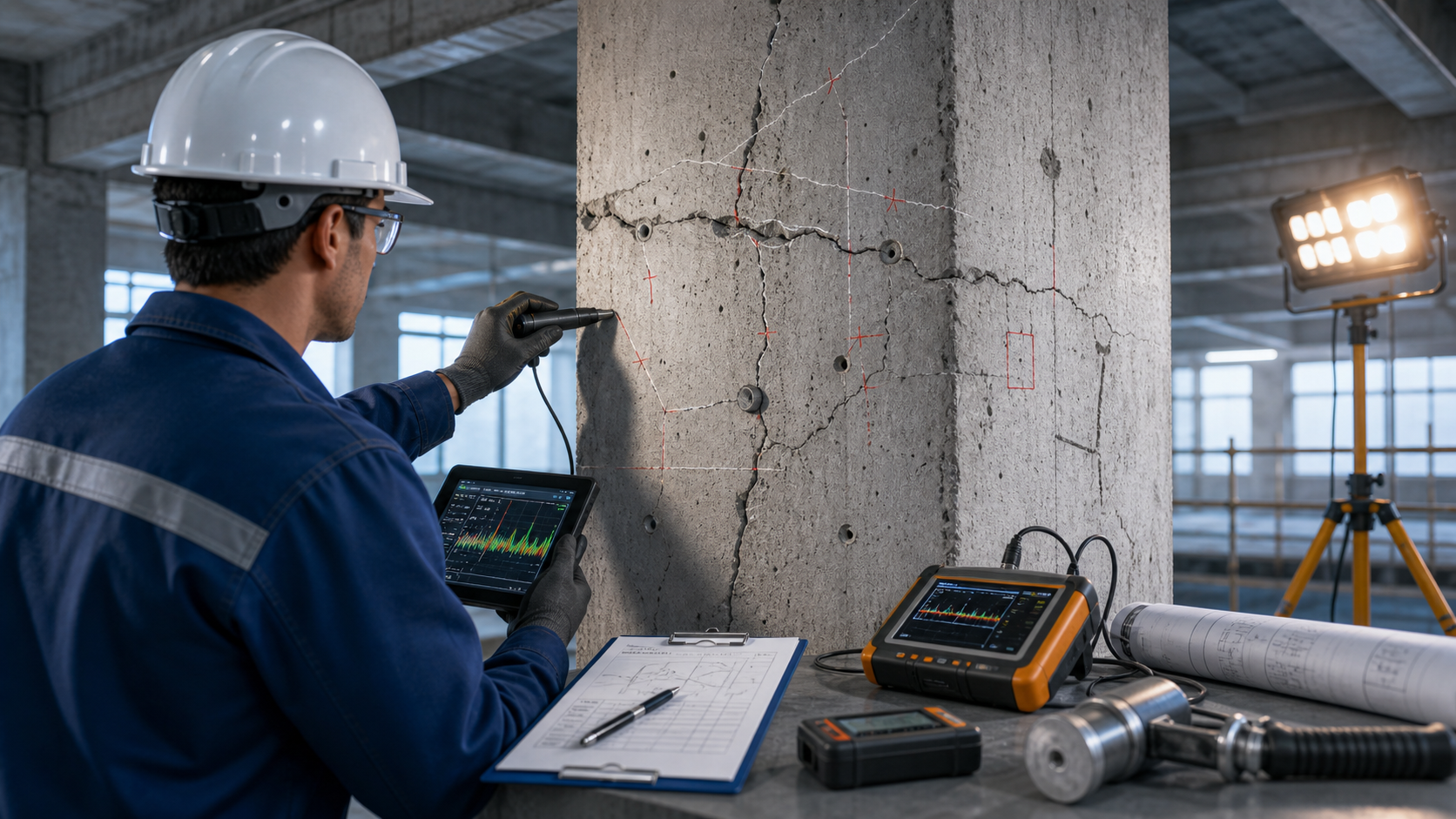
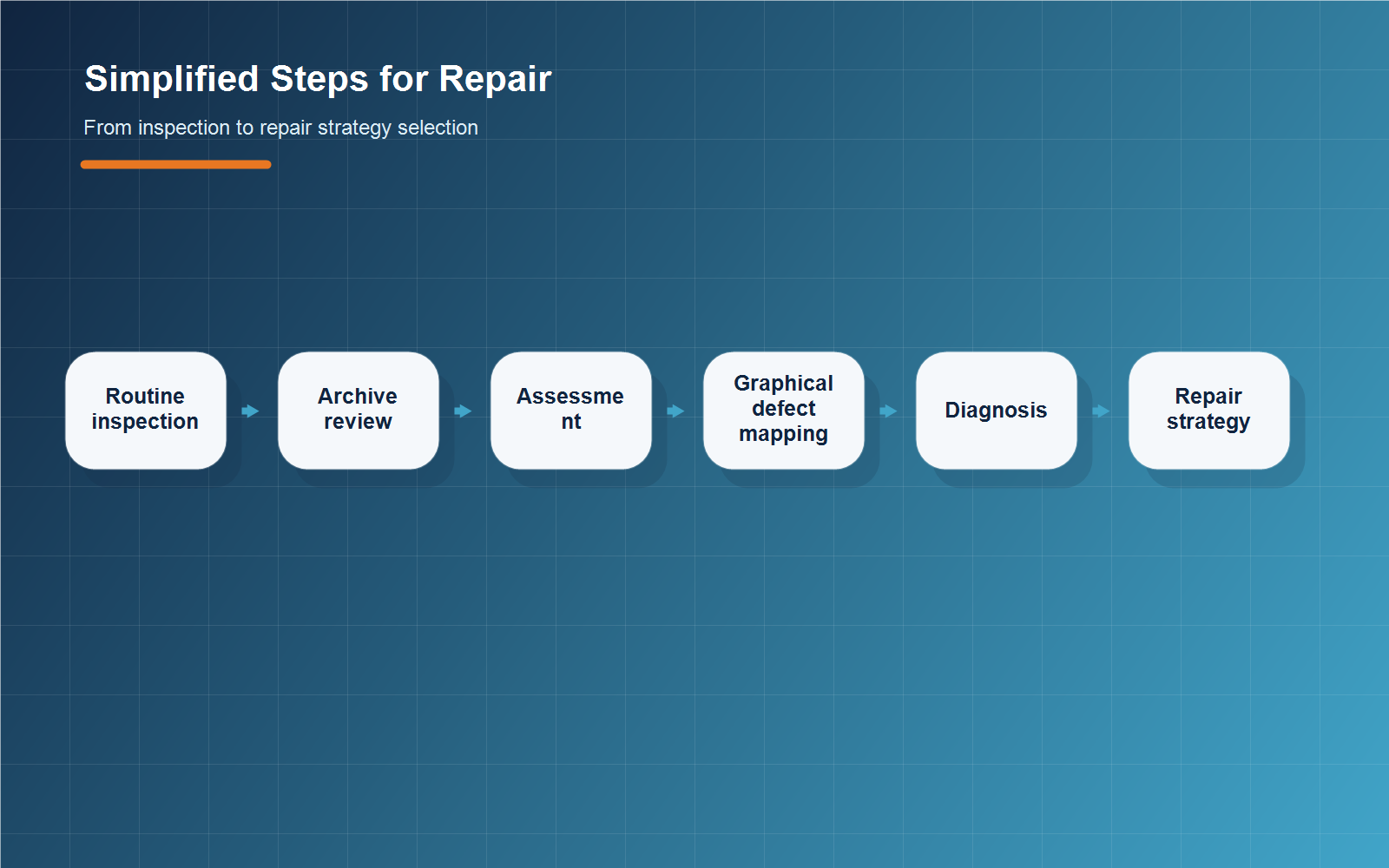
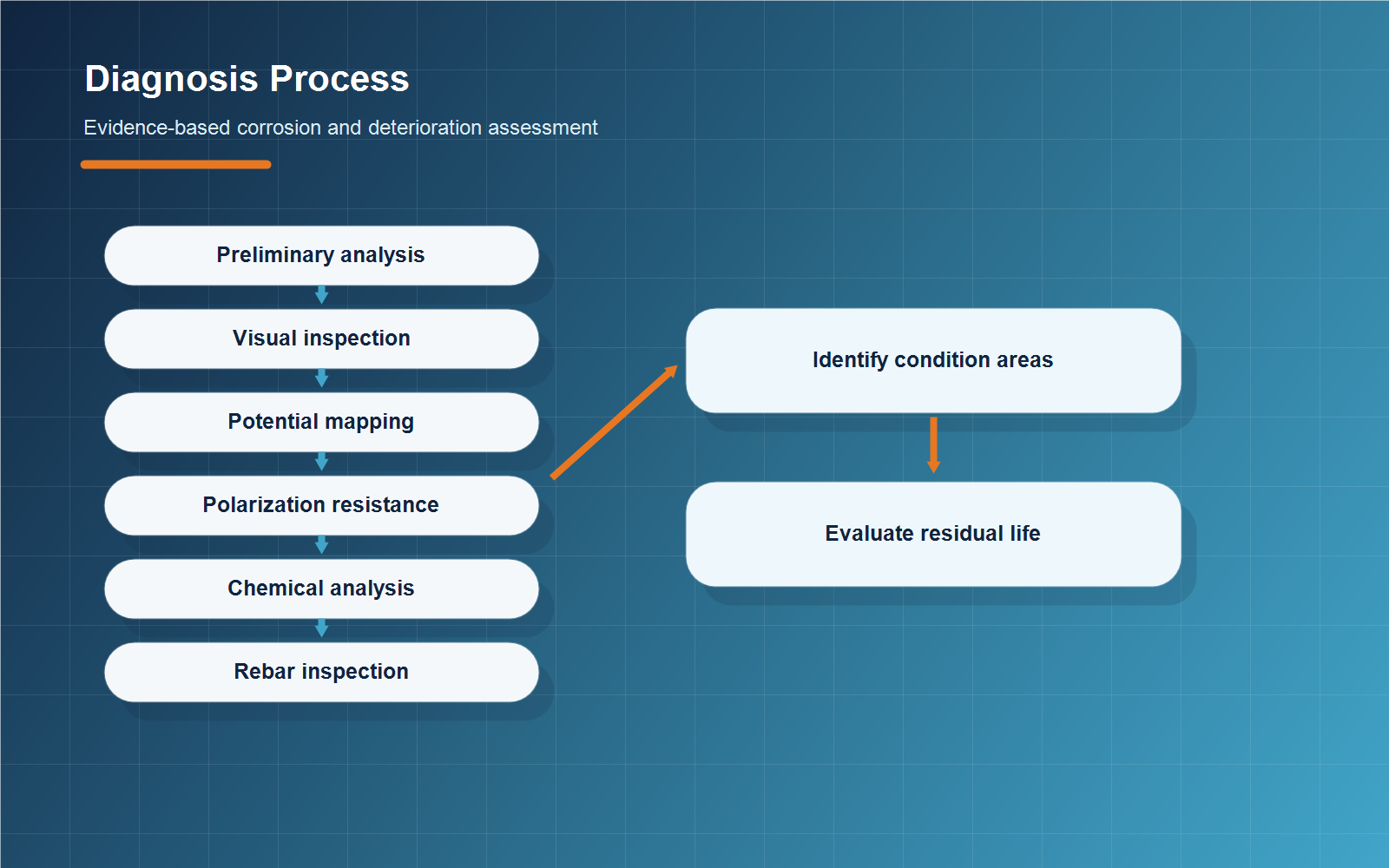
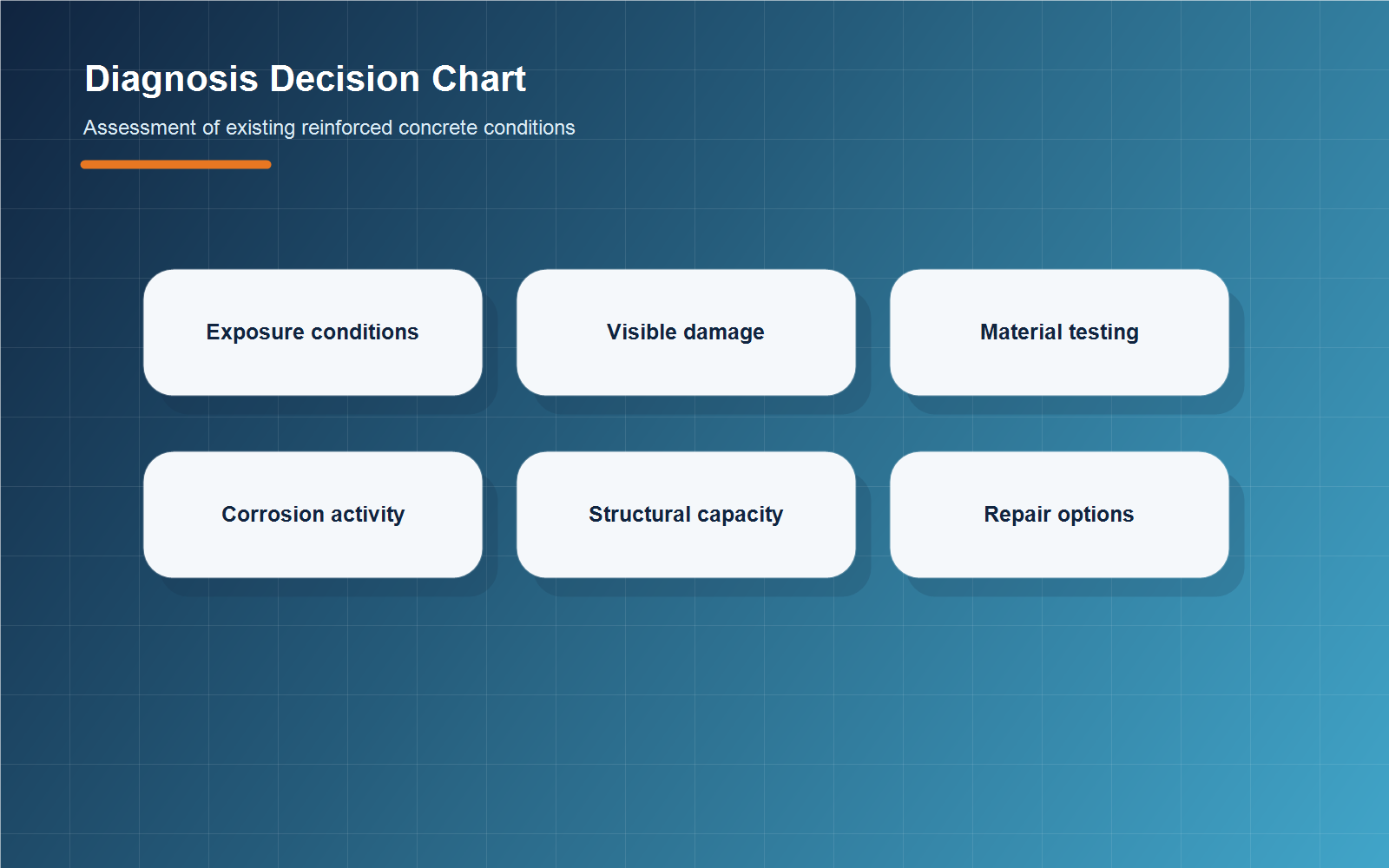
Effective concrete repair and steel structure repair begin with disciplined assessment. Our engineers evaluate visible cracking, spalling, delamination, leakage, corrosion staining, deformation, settlement, and serviceability concerns. The process may include visual inspection, hammer sounding, cover meter surveys, half-cell potential testing, carbonation depth checks, chloride screening, ultrasonic pulse velocity, rebound hammer testing, moisture mapping, and structural analysis.
We identify whether deterioration is driven by environmental exposure, design limitations, aging, workability defects, construction joints, overload, fatigue, chemical attack, or poor drainage. The result is a clear defect map and repair priority list that supports safety, budget control, and long-term asset planning.
Prognosis, Tailored Repair & Rehabilitation
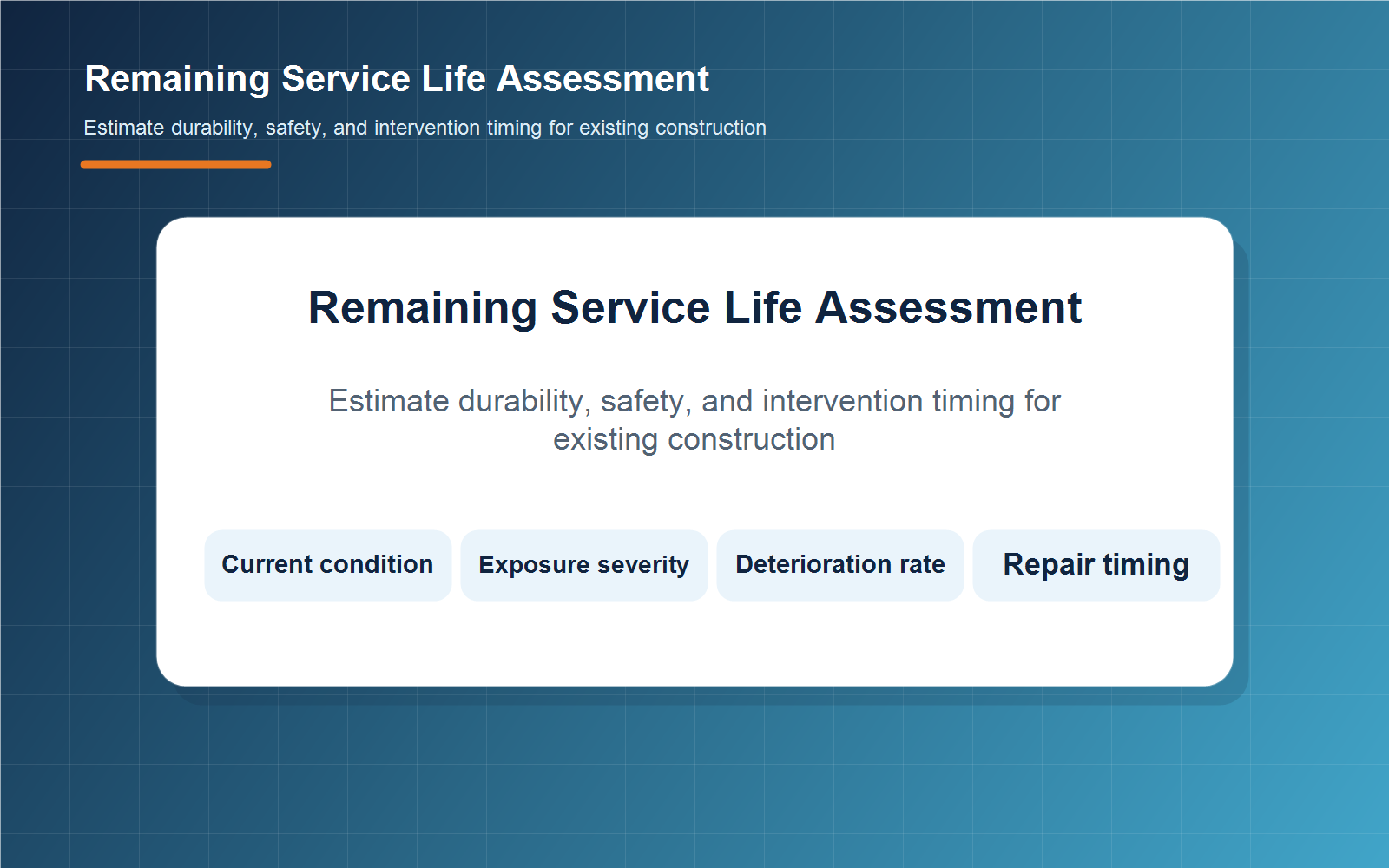
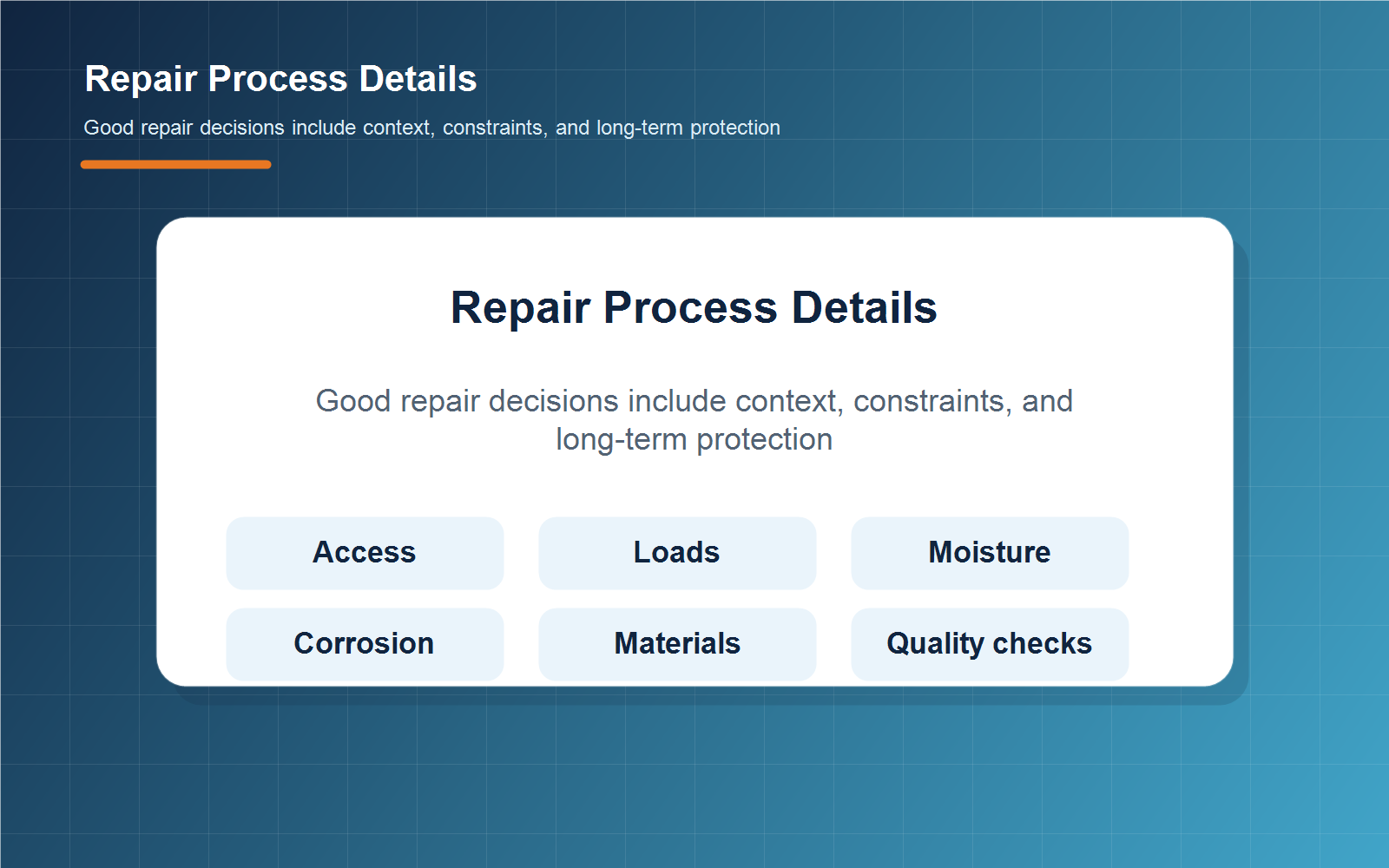
Every structural rehabilitation project has different constraints: access, downtime, loads, aesthetics, corrosion risk, cost, and expected service life. We match the repair method to the cause of deterioration. Solutions can include crack injection, concrete patch repair, section restoration, concrete jackets, additional steel reinforcement, steel jacketing, carbon fiber reinforcement, near-surface mounted reinforcement, and prestressing techniques.
These methods are selected to restore capacity, improve durability, reduce future maintenance, and extend the useful life of critical infrastructure. For strengthening comparisons, read our guide to carbon fiber reinforcement versus steel jacketing.
Protective Measures & Waterproofing
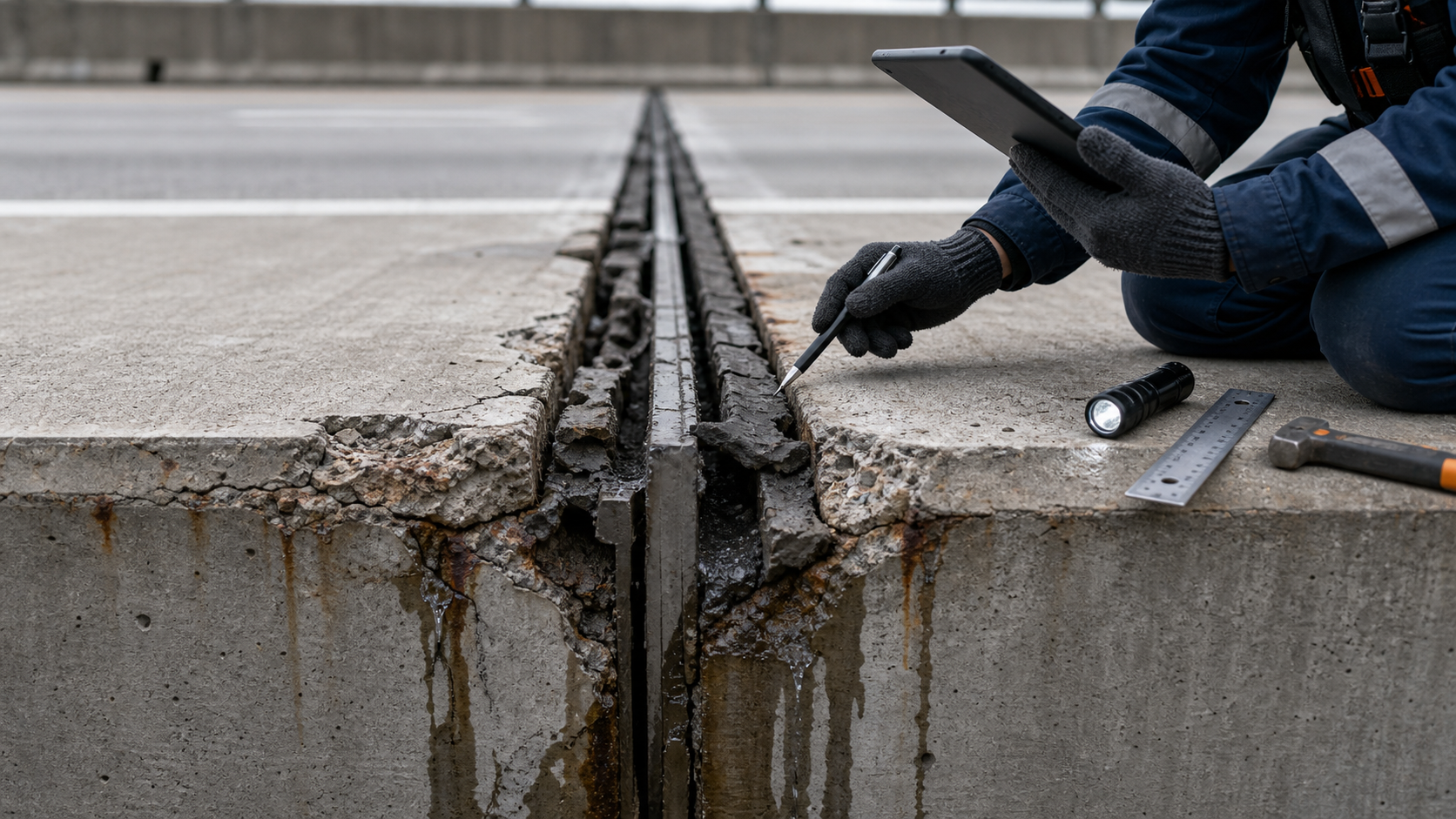
Repair without protection often leaves the same exposure path open. We design preventive systems including corrosion inhibitors, waterproofing membranes, crystalline waterproofing, joint sealing, drainage improvements, anti-carbonation coatings, epoxy systems, polyurethane coatings, zinc-rich primers, and other protective coatings for structures.
The goal is to limit water ingress, chloride penetration, carbonation, chemical exposure, and corrosion propagation. Protective measures are especially important for coastal structures, parking facilities, industrial buildings, bridges, tanks, basements, and high-humidity environments.
Standards-Compliant Procedures
Structural repair work must be traceable. Our procedures are aligned with relevant local and international standards, including ACI guidance, Eurocode principles, and coating standards such as ISO 12944 where applicable. Quality assurance checks can include surface preparation verification, repair material compatibility, pull-off testing, coating thickness checks, curing controls, documentation of environmental conditions, and post-repair review.
Before and after repairs, we confirm that the selected method addresses the observed defect and supports the intended performance. For early warning guidance, read 7 critical signs your concrete structure needs immediate repair.
Technical Visual Guides for Structural Rehabilitation
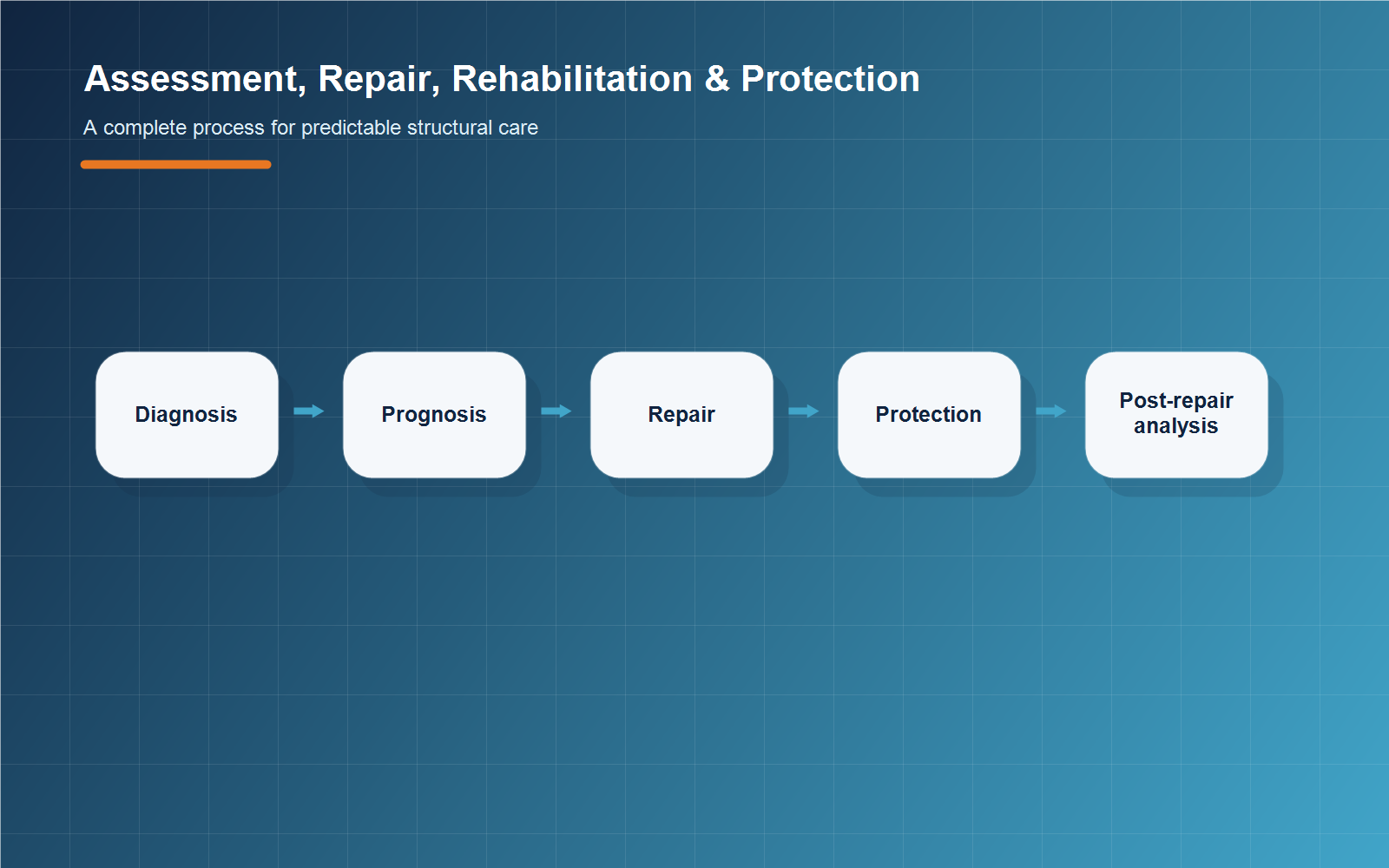
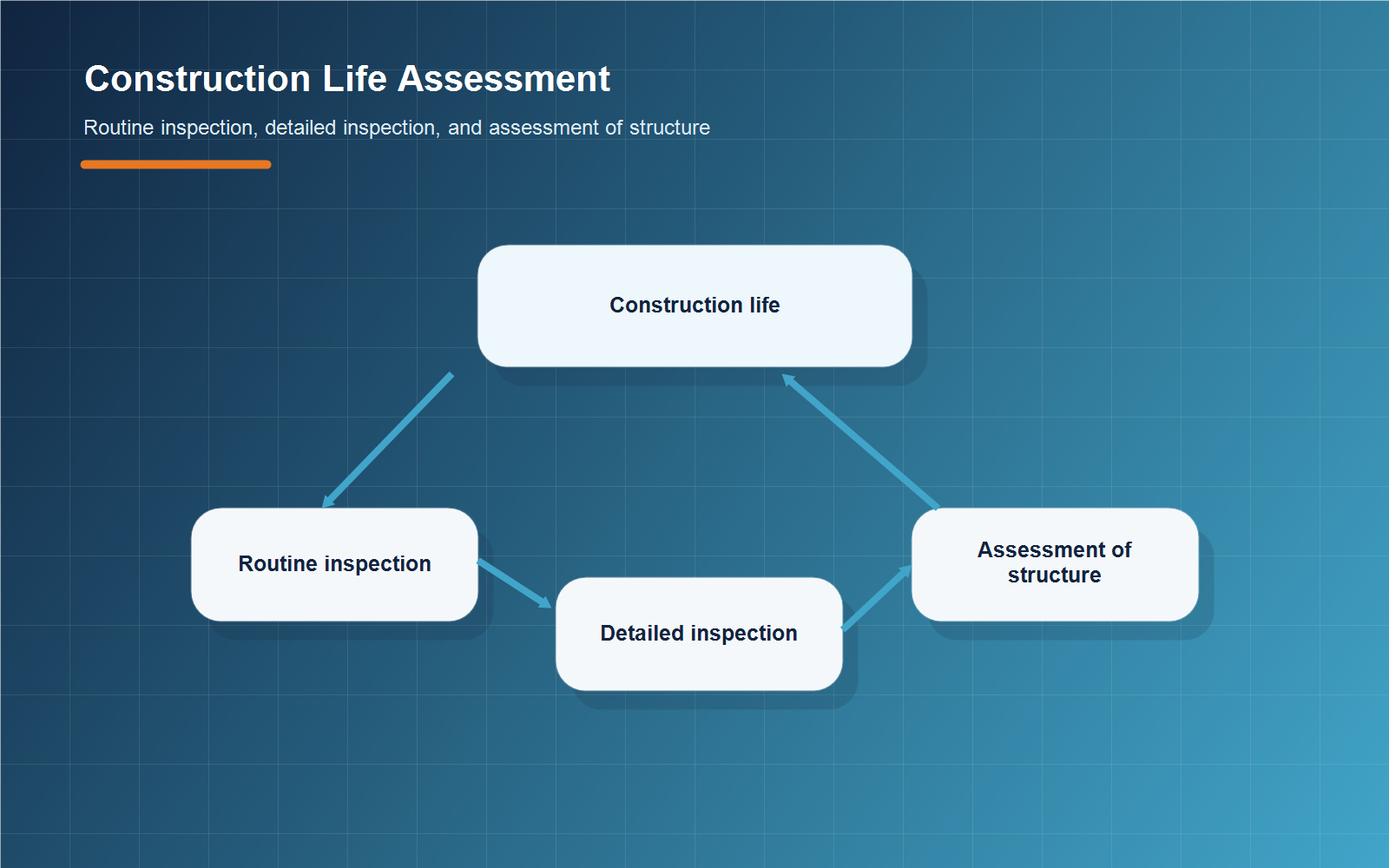
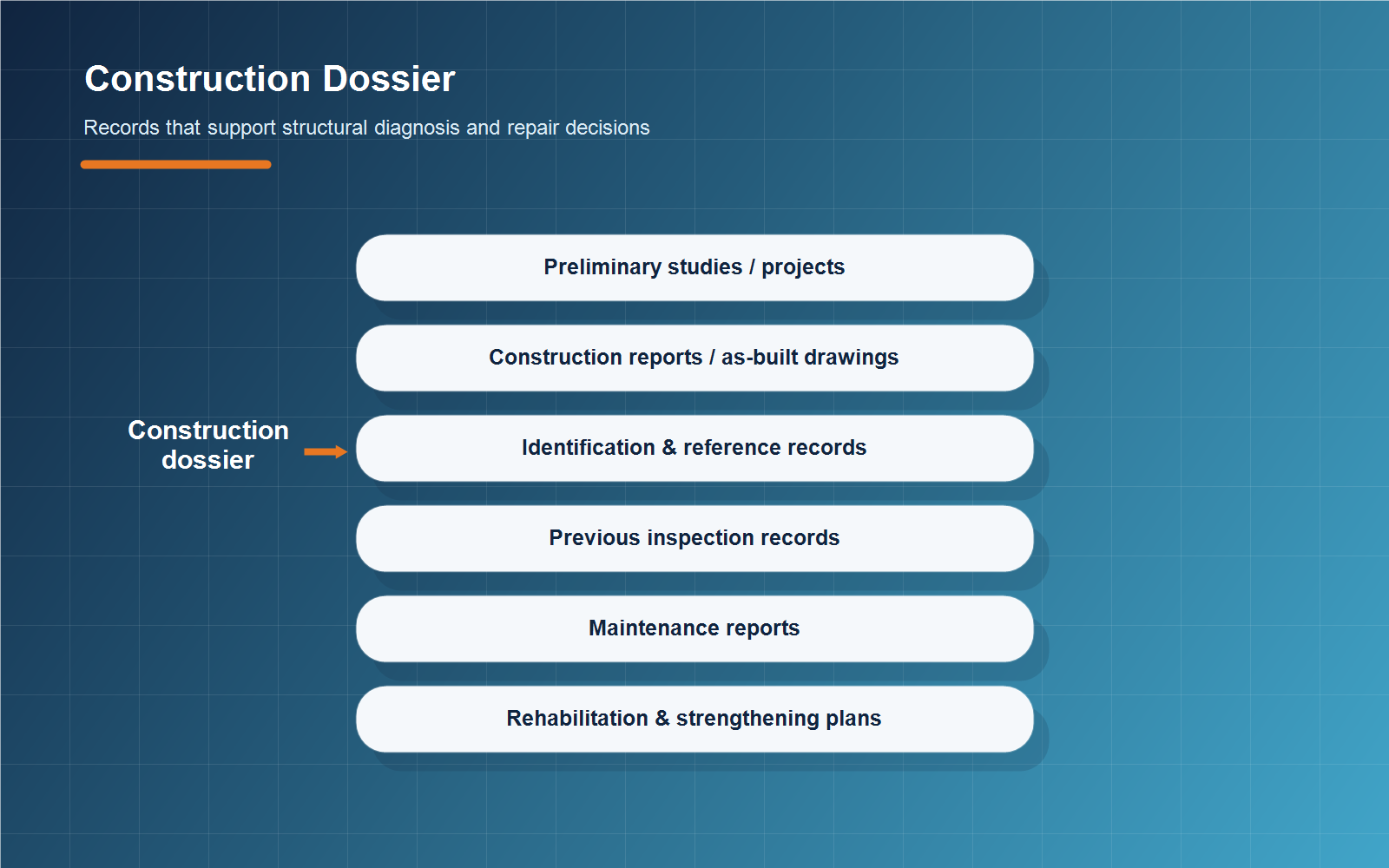
These redesigned diagrams support the service workflow: assessment, diagnosis, repair strategy, service-life forecasting, and quality-controlled implementation.
Video resources
Technical Videos for Structural Assessment and Repair
These English videos support the service workflow: monitoring policy, inspection process, and expansion joint repair considerations.