Hot-weather concrete repair is not defined by air temperature alone. A small repair patch can lose moisture rapidly when high concrete temperature, direct sun, low humidity, wind, and a dry substrate act together. The result may be shortened working time, poor consolidation, plastic-shrinkage cracking, weak edges, or a repair that never develops the bond and durability assumed by the design.
The practical answer is a project-specific hot-weather plan that starts before material arrives. It should connect environmental monitoring, substrate conditioning, batch control, placement sequence, finishing, curing, testing, and stop-work authority. This guide explains how owners, engineers, inspectors, and contractors can apply that plan to structural concrete repair without turning a generic temperature limit into a false guarantee.
Why hot weather is unusually demanding for concrete repair
Repair placements often have a high surface-area-to-volume ratio. Their edges, corners, and thin sections can heat and dry faster than a large conventional pour. Existing concrete may also absorb water from the repair material unless the specified substrate condition is established. Limited access can add mixing, transport, and placement delays just when the material’s usable working time is shrinking.
ACI PRC-305-20 describes hot weather as a combination of conditions that can impair fresh or hardened concrete, including high ambient temperature, high concrete temperature, low relative humidity, wind, and solar radiation. The correct response therefore depends on measured conditions and the repair system—not on the calendar or air temperature by itself.
Start with the approved repair system
The engineer should identify the governing repair specification, approved product data, required substrate condition, placement thickness, allowable water or component proportions, application method, temperature range, curing method, and acceptance tests. A packaged mortar, site-batched concrete, form-and-pour repair, and shotcrete placement do not share identical limits. Manufacturer instructions should be reviewed alongside the project specification rather than used as a substitute for engineering requirements.
Material suitability comes first. Review the service exposure, restraint, required early strength, modulus, shrinkage behavior, permeability, and bond requirements using a structured concrete repair material selection process. If the proposed product has not demonstrated acceptable behavior under the anticipated temperatures and geometry, require a representative repair mockup or trial panel before production work.
Build a hot-weather placement plan
Define measurable hold points
The plan should state who measures air temperature, relative humidity, wind, substrate temperature, and fresh repair-material temperature; where measurements are taken; how often they are repeated; and where they are recorded. It should also define warning and stop-work criteria, who can authorize adjustments, and how a rejected batch or interrupted placement will be handled.
Do not copy an evaporation-rate threshold from an unrelated specification and treat it as universal. The engineer should decide whether an evaporation calculation is applicable to the repair material and geometry. Direct solar heating and substrate temperature still matter even when a simplified calculation appears acceptable.
Plan the sequence backward from curing
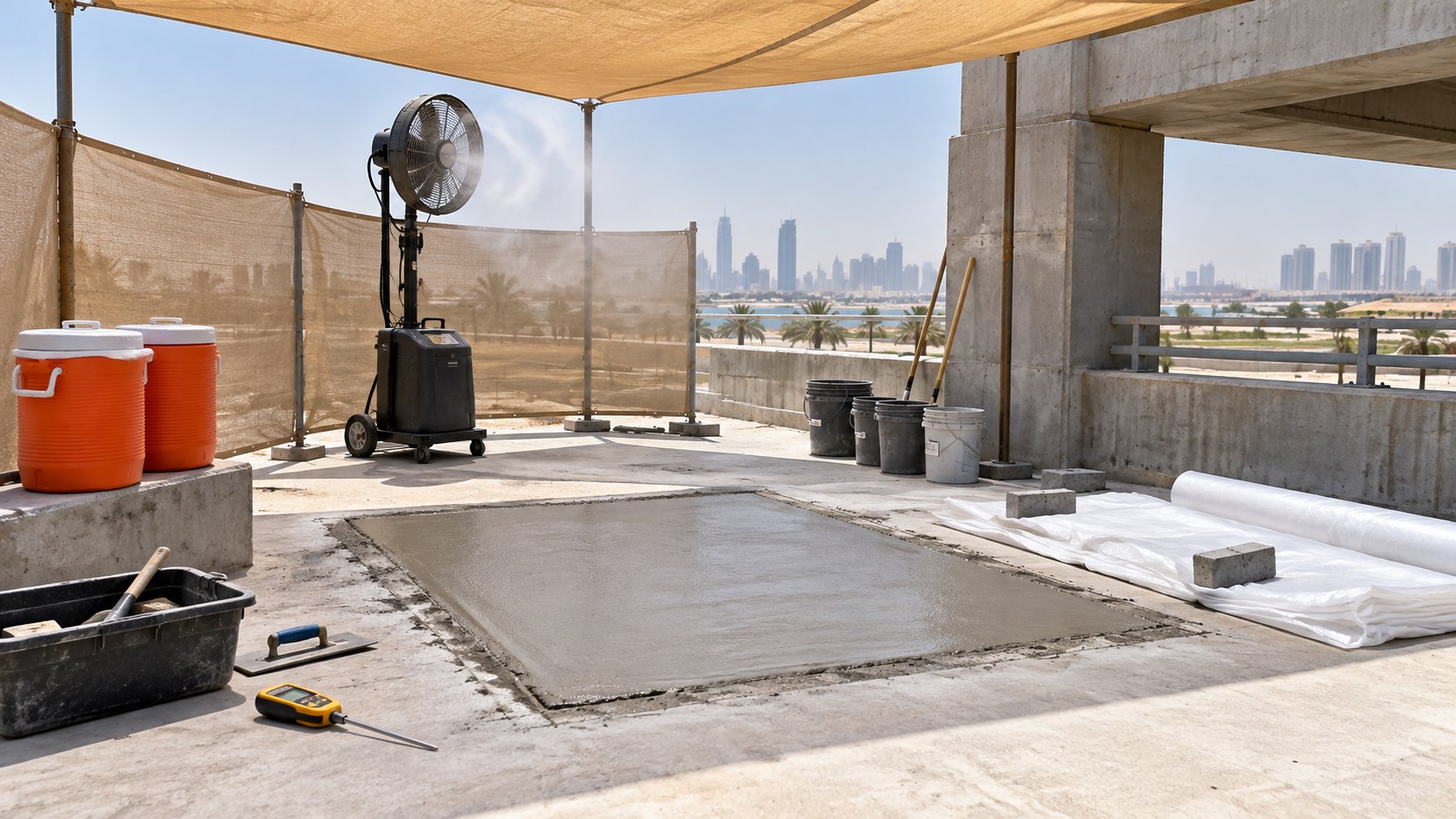
Curing materials, shade, wind control, fogging equipment when permitted, backup water, power, and protection should be ready before mixing begins. The crew should know the maximum batch size it can place and finish within the approved working time. Access routes and handoffs should be rehearsed so mixed material does not wait in buckets, pumps, hoses, or direct sun.
A formal pre-placement inspection hold point should confirm reinforcement treatment, formwork, embedded items, substrate preparation, cleanliness, moisture condition, equipment, environmental controls, and curing readiness. The field team should never begin a hot-weather repair while the curing method is still being assembled.
Control temperature without changing the mixture blindly
Store packaged components, aggregate, mixing water, tools, hoses, and equipment away from direct sun. Shade the work face early enough to reduce substrate heating; installing a canopy moments before placement may shade the surface without cooling it. Where allowed by the approved procedure, cool mixing water or other ingredients using methods that preserve the specified proportions.
Measure fresh material temperature using the applicable procedure and a verified instrument. ASTM C1064/C1064M covers temperature measurement for freshly mixed hydraulic-cement concrete, but the engineer should confirm its applicability to the specific repair product and sample size. Record the reading with batch identification, time, location, ambient conditions, and disposition.
Never add unapproved water to restore workability. Extra water can change strength, shrinkage, permeability, color, and bond, while disguising a batch that has exceeded its working time. Use only approved mixture adjustments, admixtures, or component temperatures supported by product instructions, trials, and the engineer’s acceptance. The controls in the packaged repair material mixing guide remain essential in hot weather.
Prepare the substrate and control moisture
The specified substrate condition may be dry, damp, saturated-surface-dry, or treated with a bonding system. Achieve that condition uniformly and verify it immediately before placement. Standing water, puddles, or an uncontrolled film are not the same as a correctly conditioned surface. Conversely, a hot, absorptive substrate can draw moisture from fresh cementitious repair material and compromise the interface.
Protect prepared surfaces from contamination, dust, and rapid drying. Reinspect areas that remain open longer than planned. If a bonding agent is used, respect its open time and temperature limitations; do not allow it to skin over or cure beyond the approved placement window.
Place, consolidate, finish, and cure without delay
Use smaller controlled batches when necessary and maintain a continuous supply that matches the placement rate. Place material in the defined sequence, consolidate around reinforcement and into corners, and avoid unnecessary finishing. Excessive manipulation can bring paste and water to the surface or close a drying surface before the underlying material is ready.
Windbreaks and shade can reduce exposure, but they must be stable, safely installed, and arranged so they do not trap heat or contaminate the repair. Fogging may help maintain a humid environment before final curing where permitted; it should not wash the surface or add water directly into the mixture. Curing should begin at the specified time with no avoidable gap.
Follow the approved concrete repair curing and protection method, duration, and temperature controls. Keep wet coverings continuously wet if that is the selected method. Secure sheets and membranes at edges and penetrations. Protect the repair from early loading, vibration, impact, thermal shock, and unauthorized access until the release criteria are met.
A practical QA/QC record
- Repair location, geometry, lift thickness, and approved material.
- Lot numbers, storage condition, component temperatures, and calibration status of measuring equipment.
- Air temperature, relative humidity, wind, sun exposure, substrate temperature, and material temperature at defined intervals.
- Batch start, mixing completion, placement start, placement completion, finishing, and curing start times.
- Actual water or component quantities and any approved adjustments.
- Substrate condition and pre-placement hold-point acceptance.
- Placement, consolidation, finishing, curing, and protection observations.
- Specimens or field tests, nonconformances, corrective actions, and engineer disposition.
Strength specimens are useful only when sampling and curing are controlled. Sampling, initial curing, transport, and testing should follow the project requirements and applicable standards. Where early release depends on in-place strength, a project-specific maturity correlation may be appropriate; maturity numbers alone do not prove bond, durability, or absence of cracking.
Acceptance is more than a temperature reading
A compliant discharge temperature does not erase excessive delay, substrate drying, poor consolidation, late curing, or unapproved water addition. Acceptance should consider the full placement record, visual condition, dimensions, soundness, test results, and any specified bond evaluation. Cracking, debonding, weak edges, or curing interruption requires engineering review rather than cosmetic patching.
Temperature limits must come from the contract documents, approved product requirements, and engineer. ACI’s general hot-weather specification information may inform the plan, but proprietary repair mortars can have narrower application ranges. When field conditions exceed the validated range, delaying the work or changing the shift may be safer than improvising.
Limitations and engineering responsibility
This article is general guidance, not a repair design, method statement, product approval, or acceptance criterion. Structural repairs should be designed and reviewed by qualified professionals familiar with the existing structure, loads, deterioration mechanism, materials, exposure, and local requirements. Safety planning must address heat stress, access, lifting, pressurized equipment, silica, chemicals, and temporary stability separately from material-quality controls.
Frequently asked questions
What temperature makes a concrete repair a hot-weather placement?
There is no single air-temperature trigger that covers every repair. Evaluate air and material temperatures together with humidity, wind, solar radiation, substrate temperature, geometry, product limits, and placement duration. Use the project specification and approved product requirements for enforceable limits.
Can the crew add water when repair mortar stiffens?
Only if the approved instructions and project procedure explicitly allow a controlled adjustment within stated limits. Unrecorded retempering or water added after the permitted period can invalidate mixture performance and should not be used to rescue an aging batch.
Is shade enough to protect a repair?
No. Shade can reduce solar heating, but the plan may also need cooled ingredients, smaller batches, substrate conditioning, wind control, rapid transport, immediate curing, monitoring, and adjusted work hours.
Should hot-weather repair work always be moved to night?
Night work can reduce solar load and temperature, but it introduces lighting, supervision, condensation, humidity, access, and safety considerations. Select the work window from measured conditions and a reviewed method statement, not from time of day alone.
Plan the repair before the temperature rises
Structural Rehab can help owners and project teams review concrete repair scope, hot-weather hold points, material submittals, mockups, testing, and field records. Book a structural rehabilitation consultation or use our educational resources to prepare better questions before work begins.
Authoritative sources
- ACI PRC-305-20, Guide to Hot Weather Concreting
- ACI technical FAQ: maximum temperature limits for hot-weather concreting
- ASTM C1064/C1064M-23, Temperature of Freshly Mixed Hydraulic-Cement Concrete
- ICRI 110.1R-2026, Guide Specifications for Structural Concrete Repair
- FHWA guide for curing portland cement concrete pavements, annotated standards
Need a professional structural assessment?
Book a consultation with Structural Rehab to evaluate repair priorities, corrosion risks, and rehabilitation options before damage escalates.
Book Consultation