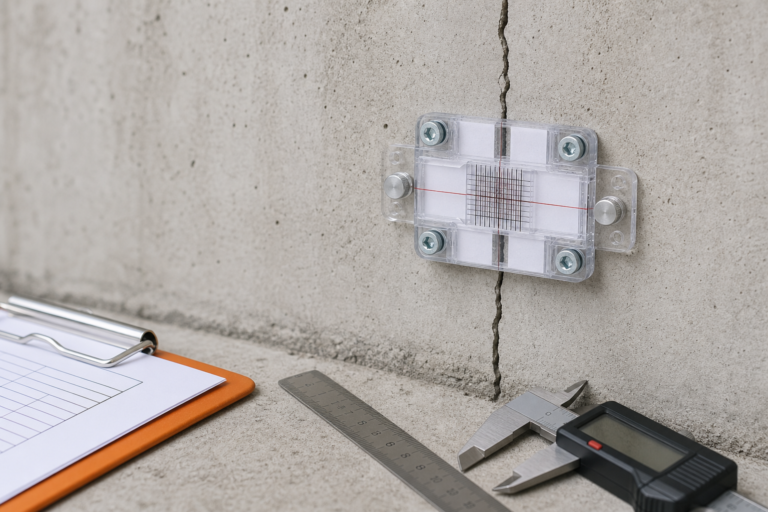
Concrete Crack Monitoring Before Repair: Measure Movement, Then Choose the Fix
Concrete crack monitoring before repair separates seasonal or load-related movement from progressive distress so the repair method matches the crack’s real behavior.
Concrete crack monitoring before repair separates seasonal or load-related movement from progressive distress so the repair method matches the crack’s real behavior.

Pre-placement inspection for concrete repairs confirms the substrate, reinforcement, edges, moisture condition, formwork, materials, and weather are ready before repair material goes in.

Hydrodemolition for concrete repair can remove unsound concrete while preserving reinforcement, but success depends on investigation, calibration, containment, bond checks, and repair QA/QC.
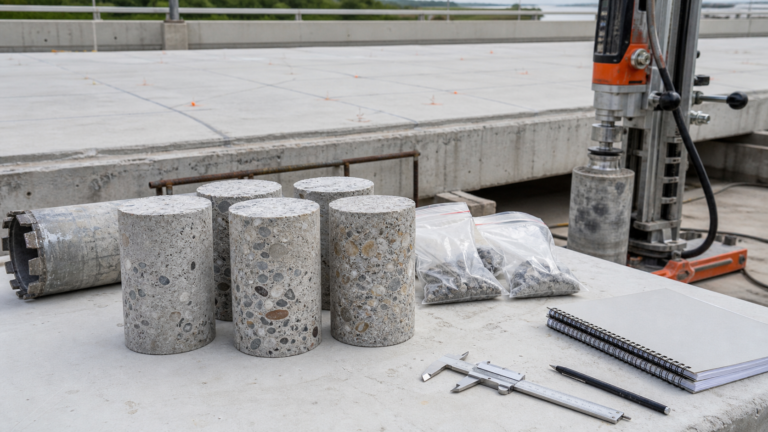
Concrete core testing before repair should answer a defined engineering question about strength, distress, durability, or contamination before invasive work begins.
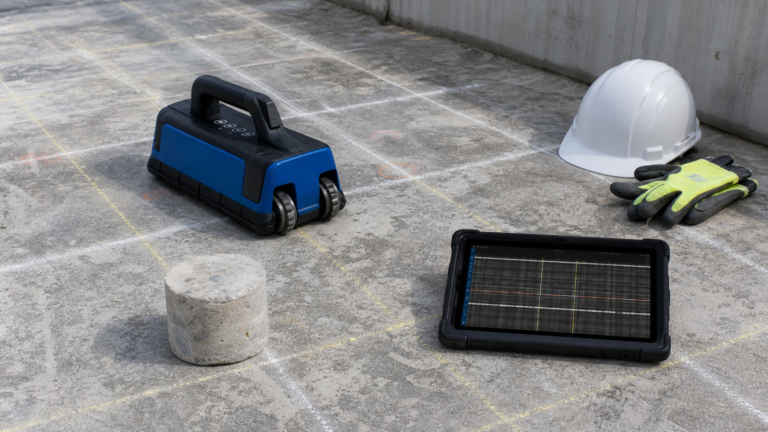
Rebar locating before concrete repair helps control drilling, coring, saw cutting, anchors, and removal by combining cover meter surveys, GPR, and selective verification.

Concrete surface protection after repair should be selected around exposure, cracking, chloride risk, moisture movement, and maintenance access instead of treated as a cosmetic finish.
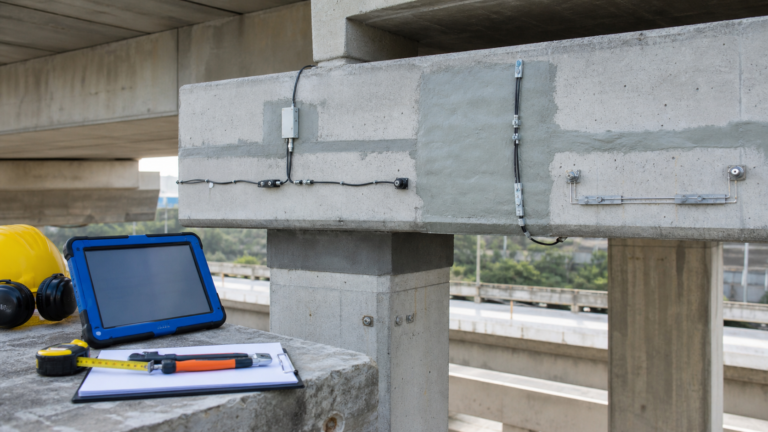
Post-repair structural monitoring helps owners confirm repaired concrete remains safe, durable, and serviceable after acceptance instead of waiting for distress to reappear.

A UHPC bridge deck overlay can add durable protection and stiffness, but success depends on deck assessment, surface preparation, bond, curing, and QA/QC.
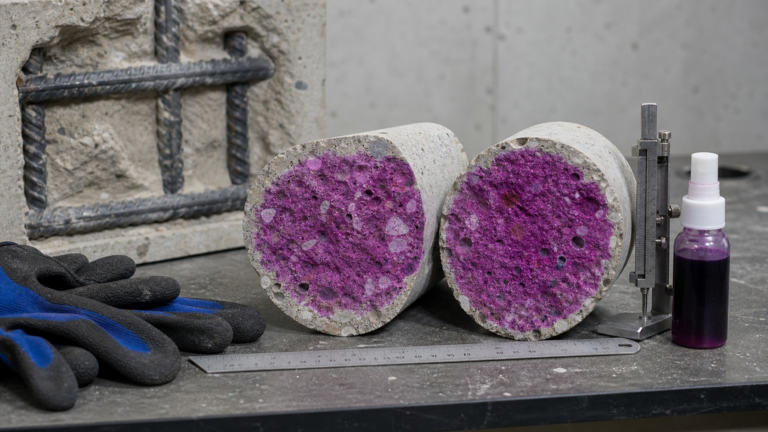
Carbonation depth testing helps determine whether concrete alkalinity still protects reinforcement, and whether repair should include cover restoration, corrosion control, or protection.
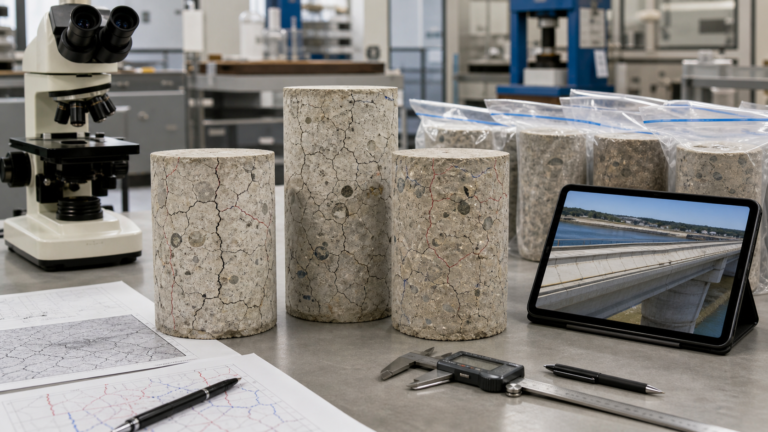
ASR concrete repair starts with diagnosis, expansion monitoring, moisture control, structural checks, and realistic mitigation limits before strengthening or replacement is selected.