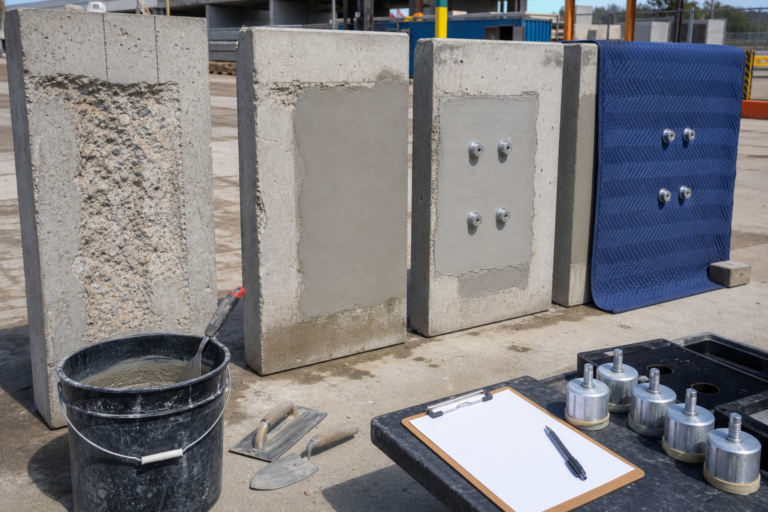
Concrete Repair Mockups and Trial Panels: How to Reduce Field Failure Risk
Concrete repair mockups and trial panels verify surface preparation, placement, curing, bond, access, color, and inspection criteria before full-scale work starts.
Concrete repair mockups and trial panels verify surface preparation, placement, curing, bond, access, color, and inspection criteria before full-scale work starts.
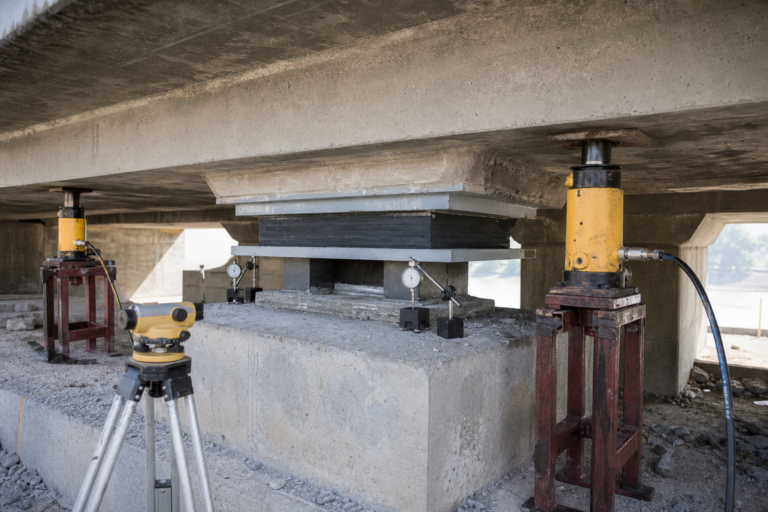
A practical bridge bearing rehabilitation guide covering movement assessment, jacking plans, bearing replacement, seat repair, corrosion protection, and inspection records.
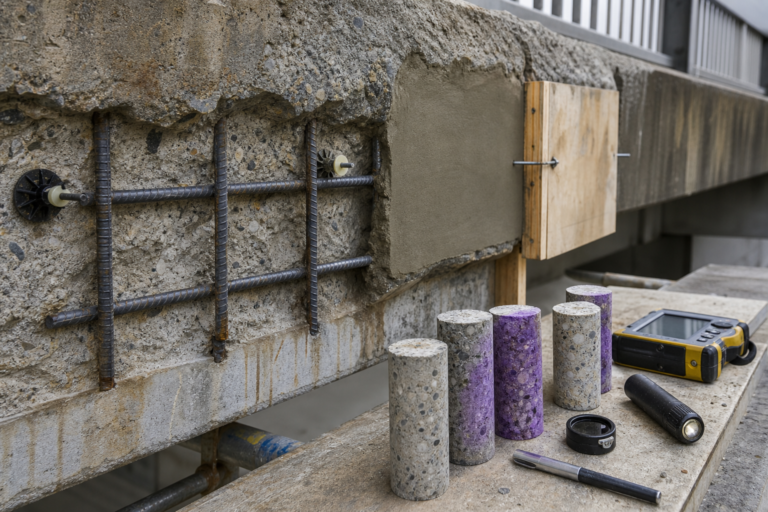
How to restore concrete cover in reinforced concrete repair without hiding chloride risk, recreating corrosion cells, or missing detailing and QA/QC requirements.
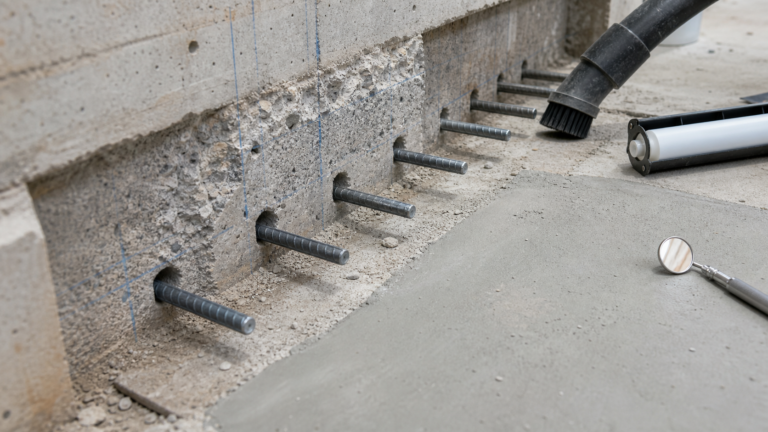
Post-installed rebar dowels in concrete repair must be engineered around load transfer, embedment, substrate condition, adhesive qualification, drilling, cleaning, cure, and inspection.
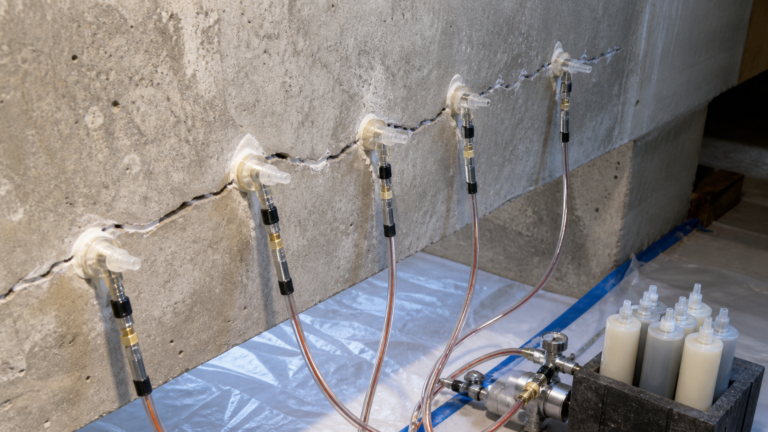
Epoxy injection can restore continuity in suitable dormant structural concrete cracks, but only after crack cause, movement, moisture, corrosion, and QC requirements are verified.
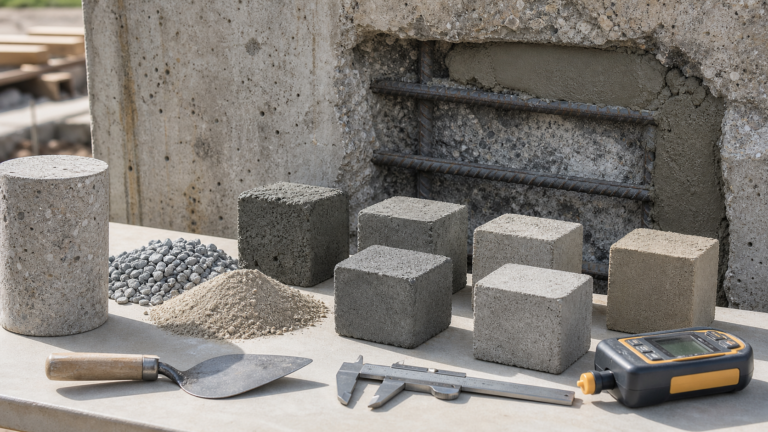
Concrete repair material selection should match structural demand, exposure, substrate condition, placement method, shrinkage, modulus, bond, curing, and inspection requirements.
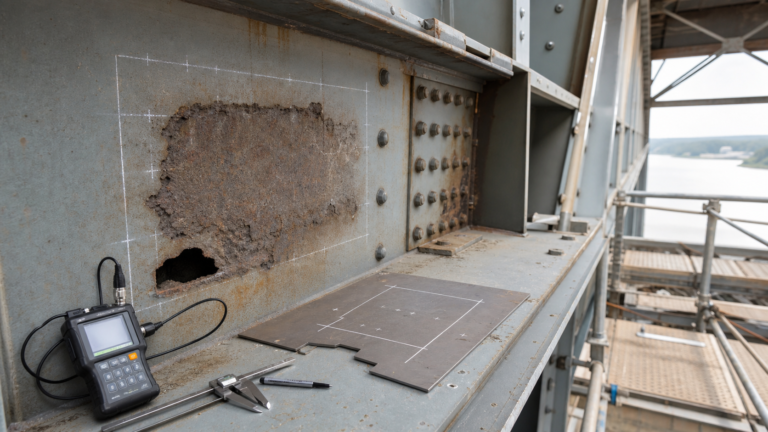
Structural steel section loss repair starts with measured remaining thickness, demand checks, connection review, and coating access before plates, splices, replacement, or strengthening are selected.
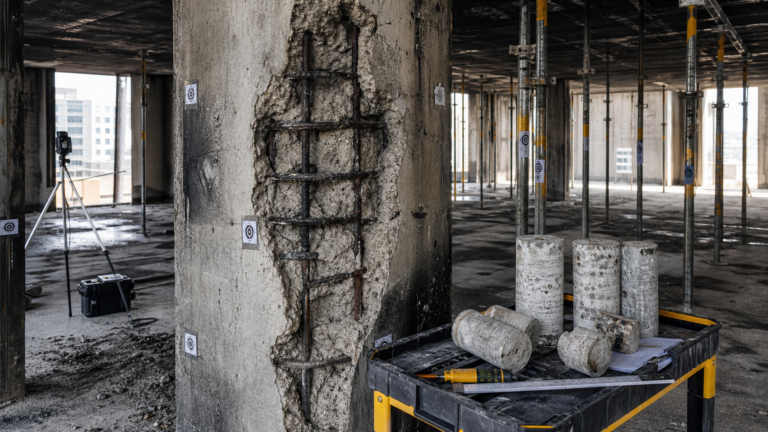
Fire-damaged concrete assessment should verify safety, heat exposure, residual capacity, reinforcement condition, and repair limits before any patching or strengthening work begins.
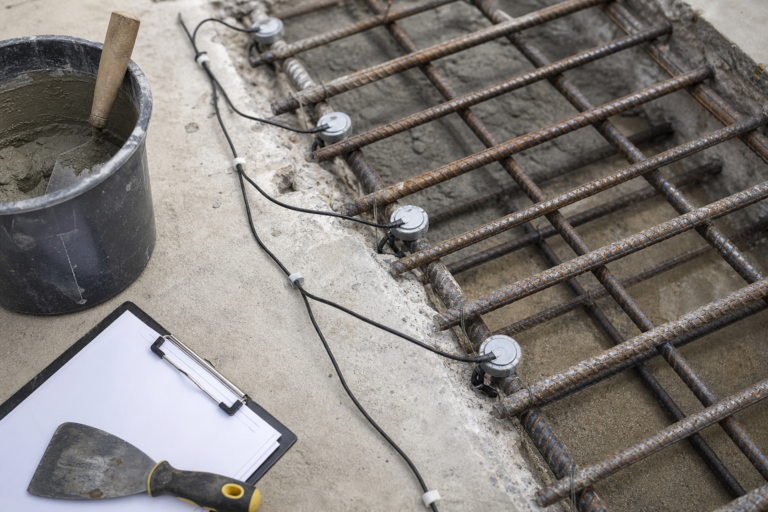
Galvanic anodes can reduce corrosion risk around concrete patch repairs, but they must be designed around chloride exposure, electrical continuity, concrete resistivity, and repair geometry.
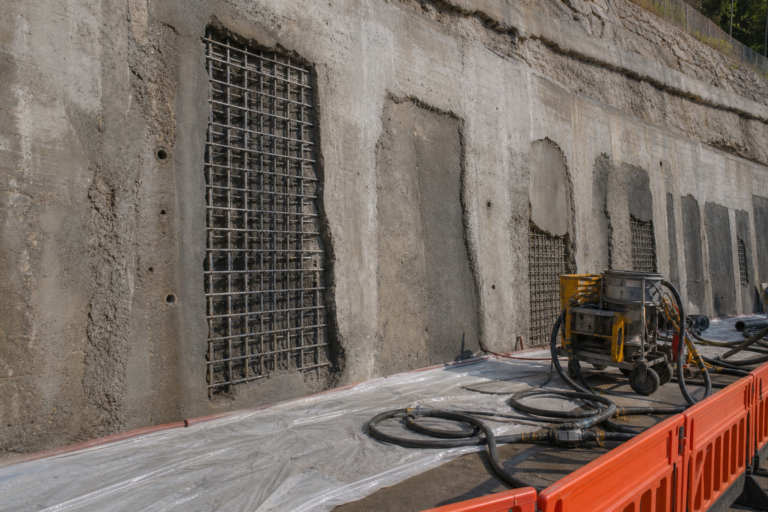
Shotcrete can be an efficient structural concrete repair method, but durable results depend on removal limits, reinforcement treatment, nozzle technique, curing, and QA/QC records.